
When You Are at the Verge of Giving up

when you are at the verge of giving up

There is a specific kind of silence that happens when you reach the end of your rope. It’s not peaceful, it’s heavy. It’s the moment after months of trying, crying, or working yourself to the bone, where you are at the verge of giving up and your mind whispers a single, seductive word: Quit.

Being on the verge of giving up is a lonely, exhausting place to be. Whether it’s a career path that feels dead-end, a relationship that drains you, a creative project that has stalled, or a mental health battle that feels uphill, hitting the wall is a universal human experience.

But standing on that edge doesn’t mean you have to jump. Sometimes, the verge of giving up is actually the threshold of a breakthrough.

1. Rest Instead of Quitting

When we are overwhelmed, we think we only have two options: suffer or quit. We forget about the best choice that is, taking a break.

If you were running a race and ran out of breath, you wouldn’t quit sports forever. You would slow down, drink water, and catch your breath. Treat your life the same way. Before you throw everything away, just rest for a weekend.

2. Focus on the Next 5 Minutes

We usually want to quit because the future looks too big and scary. Looking at the top of a giant mountain just makes you dizzy. Instead, look at your feet.

Do not worry about next month or next year. Just ask yourself: Can I get through the next five minutes? Can I send one email? Can I do one small task? Breaking time into small pieces makes life easier to handle.

3. Check Your Goals

Sometimes, wanting to quit is a sign that you are chasing something you do not actually care about anymore.

  • Keep going if: You still want the final goal, but you are just tired and afraid of failing right now.
  • Let go if: The goal no longer fits who you are, or you are only doing it to please other people.

If you still want the goal, your pain is just growing pains. If the goal no longer matters to you, letting go is not quitting, it is just moving on.

4. Remember What You Have Survived

When you feel down, your brain forgets how strong you are. It forgets all the tough times you have already beaten.

Look back at your life. Think about the bad days, the heartbreaks, and the failures you thought would break you. You survived all of them. Your track record for beating hard days is 100%. So, this current problem is no different.

5. Ask for Help

When your own energy tank is completely empty, it is okay to rely on the strength of others. Reach out to a friend, a mentor, or a professional and say the hardest words: “I’m struggling, and I don’t know if I can keep going.”

Let them remind you who you are. Let them hold the flashlight for a little while until your own eyes adjust to the dark.

This is Just a Moment

We often hear that the darkest hour is just before the dawn. But when you are stuck in the dark, the sunrise feels impossible.

If you want to give up today, don’t make a permanent decision just because you are temporarily exhausted. Close your eyes, take a deep breath, and allow yourself to just rest without needing to fix everything right now.

You don’t have to conquer the world today. You just have to step back from the edge.
Why spending time alone is important?

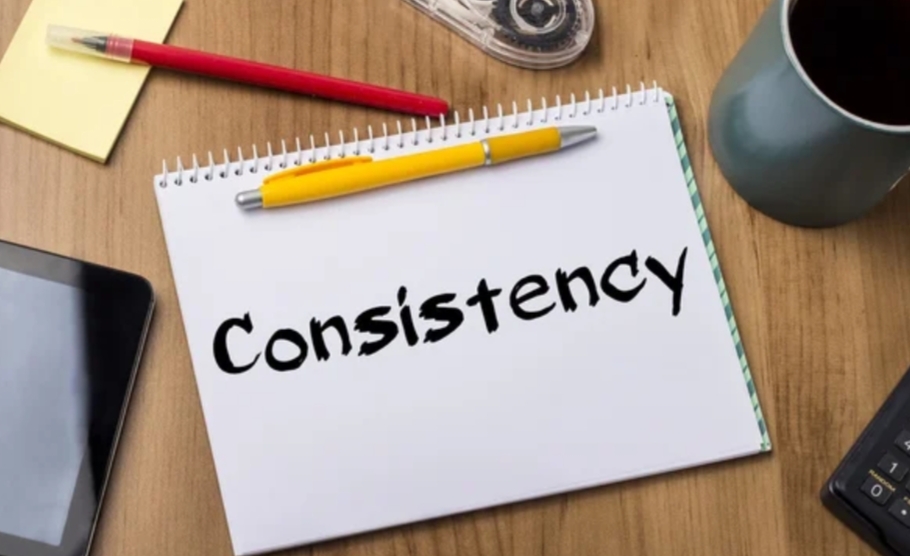
Consistency is not Easy to Achieve

consistency is not easy to achieve

We hear the word consistency everywhere. From fitness influencers to business gurus, the advice is always the same: “Just show up every day.” It sounds like a simple instruction, almost like a recipe for a cake.

But if it were actually simple, we would all have six-packs, five-year journals filled to the last page, and perfect sleep schedules. The truth is that consistency is one of the hardest human behaviors to master. It isn’t a natural state, it is a constant fight against our own nature.

The Reality of the “Starting Line”

Most of us start a new goal with a burst of motivation. Motivation is like a bonfire, it’s hot, bright, and exciting, but it burns out quickly. When the fire dies down, you are left with the cold reality of the work.

Consistency is what happens when the motivation is gone. It’s doing the work when you’re tired, bored, or busy. This transition from excited beginner to steady worker is where most people quit, and for good reason.

Why Our Brains Fight Consistency

1. We Love New, We Hate Normal

Our brains are wired to seek out novelty. When you start a new hobby, your brain is flooded with excitement. But by week three, that hobby becomes normal. Once something is normal, it becomes a chore. Our biology encourages us to jump to the next new thing rather than sticking with the old one.

2. The Results are Invisible (At First)

Imagine you are melting an ice cube in a room that is -10°C. You turn the heat up to -5°C. Nothing happens. You turn it up to -1°C. Still, the ice cube sits there.

To an observer, it looks like you are failing. But then, you hit 1°C, and suddenly the ice starts to melt. Consistency is the work you do between -10°C and 0°C. It is frustrating because you are putting in maximum effort for zero visible return. Most people stop at -1°C because they think the heater is broken.

3. Life is Chaotic

The consistency experts often assume you live in a vacuum. They don’t account for:

  • Getting a cold.
  • Your car breaking down.
  • A stressful week at the office.
  • Poor sleep.

Consistency is hard because life is constantly trying to knock you off your path. Staying consistent means you have to constantly re-adjust your plan to fit a messy reality.

The Traps We Fall Into

The All-or-Nothing Mindset

We often think that if we can’t do a perfect version of our habit, we shouldn’t do it at all.

  • “I don’t have an hour for the gym, so I won’t go.”
  • “I ate a cookie, so my whole diet is ruined for the week.”

This mindset is the enemy of consistency. Consistency isn’t about being perfect, it’s about being frequent. A 10 minute walk is better than a 0 minute run. A single sentence written is better than a blank page.

Comparison to the End Goal

We look at people who have been consistent for ten years and compare our Day 1 to their Year 10. This makes our progress feel small and insignificant. When progress feels small, we lose the will to keep going.

How to Make It a Little Easier

Since we know consistency is hard, we shouldn’t rely on willpower alone. Willpower is a limited battery. Instead, we need to use systems.

  • Shrink the Task: If your goal is to read for an hour, make the requirement “read one page.” You can always do more, but you are only required to do the small version. This keeps the streak alive even on bad days.
  • Environment Design: Don’t rely on memory. If you want to take vitamins, put them next to your toothbrush. If you want to practice guitar, take it out of the case and put it in the middle of the room.
  • Focus on the Identity, Not the Goal: Instead of saying “I want to run a marathon,” say “I am a runner.” A runner is someone who runs, even if it’s just for fifteen minutes. When it becomes part of who you are, it’s less about achieving and more about being.

Consistency is not a straight line. It’s a jagged, messy path of starting, stopping, failing, and restarting.

It is not easy to achieve because it requires you to be your own boss, your own coach, and your own cheerleader all at once. The goal shouldn’t be to never miss a day, the goal should be to never miss two days in a row. That is the secret to building a life that actually changes.

What is the value of money?