Patience is Necessary for Growth

patience is necessary for growth

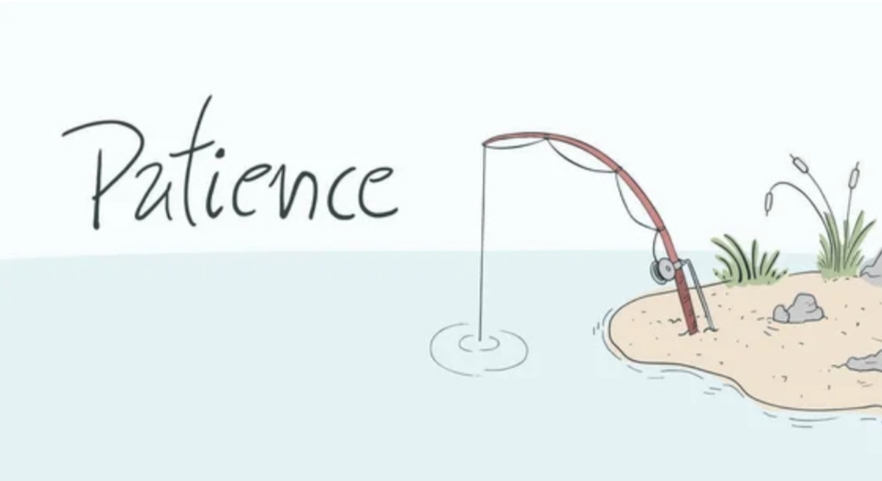
We live in an era of instant gratification. We stream movies in seconds, get groceries delivered in minutes, and expect our career or personal milestones to hit with the speed of a high-speed internet connection. But nature and human psychology operate on a completely different timeline. The uncomfortable truth is that true, sustainable growth cannot be hacked. Whether you are building a business, mastering a skill, healing from trauma, or cultivating a relationship, patience isn’t just a virtue, it is the very infrastructure required for development.

1. The Iceberg Effect of Success

When we look at successful people, we are usually looking at the final product: the thriving business, the shredded physique, or the published novel. What we don’t see is the years of invisible foundation-building.

  • The Chinese Bamboo Analogy: For four years, a Chinese bamboo tree shows no visible growth above ground. It requires daily watering and care. To an outsider, it looks like a failure. But in the fifth year, it shoots up eighty feet in just six weeks.
  • The Reality: The tree wasn’t idle for four years, it was growing a massive root system capable of supporting its impending height. Patience is the period where you build your roots.

2. Mastery Requires Cognitive Slowness

In a rush to get to the finish line, we often bypass the deep, repetitive practice required for mastery. According to neuroscientists, learning a new skill involves building neural pathways and coating them in myelin, a substance that allows signals to move faster and more efficiently.

Growth takes repetition. You cannot rush the physical rewriting of your brain. Rushing leads to shallow understanding and sloppy execution. Patience allows you to slow down, make mistakes, correct them, and cement true capability.

3. Resilience is Forged in the Waiting Room

If growth happened overnight, we wouldn’t develop the emotional maturity required to sustain it.

  • Handling Failure: When progress is slow, you are forced to confront setbacks, boredom, and doubt.
  • Character Building: Navigating these hurdles builds emotional resilience.
  • The Takeaway: If you get everything you want immediately, the first major storm will blow your house down. Patience teaches you how to weather the wind.

Embracing the Slow Burn

If you feel like you are working hard but standing still, remember that delay is not denial. You are likely in the “root-building” phase of your journey.

Shift your focus from the horizon to the step right in front of you. Trust the process, embrace the boredom of daily repetition, and give yourself the grace of time. The grandest structures require the deepest foundations, and those take time to pour.

Resilience Will Never Let You Fail

resilience will never let you fail

In a world that often measures success by a straight line upward, we tend to view “failure” as a dead end. We treat it like a final grade or a closed door. But if you shift your lens, you’ll find that failure isn’t the opposite of success, it’s the seasoning that gives it flavor. The secret ingredient that prevents a temporary setback from becoming a permanent defeat is resilience.

When I say “resilience will never let you fail,” I don’t mean you’ll never stumble. I mean that with a resilient mindset, the concept of failure as a final state ceases to exist.

The Anatomy of Resilience

Resilience isn’t just toughing it out. It is the psychological elasticity that allows a person to be compressed by stress, grief, or professional disaster and eventually snap back, often stronger than before.

It is built on three core pillars:

  1. Acceptance: Facing the reality of a situation without sugar-coating or denial.
  2. Adaptability: The willingness to pivot when the original plan falls apart.
  3. Purpose: A deep-seated belief that there is a “why” behind the struggle.

Redefining the word “Failure”

The biggest hurdle to success is often the fear of failure. This fear paralyzes innovation and keeps us in our comfort zones. However, resilience changes the definition of the word:

  • To the brittle mind: Failure is a verdict on one’s worth.
  • To the resilient mind: Failure is data. It is a feedback loop.

If you try to launch a business and it folds, the brittle person says, “I am a failure. The resilient person says, “That business model didn’t work, and now I know exactly why.” As long as you are learning, you haven’t failed, you’ve simply completed a very expensive masterclass in what doesn’t work.

How Resilience Prevents Permanent Defeat

Resilience acts as a safety net for your ambitions. It ensures that your journey is defined by momentum rather than perfection.

  • It Sustains Energy: Pure willpower is a finite resource. Resilience, fueled by a sense of purpose, acts as a renewable energy source that keeps you moving when the initial excitement fades.
  • It Encourages Risk: When you know you have the tools to recover from a fall, you’re more likely to climb higher.
  • It Builds “Mental Callouses”: Much like physical exercise creates micro-tears in muscle that heal back stronger, psychological setbacks toughen your spirit. Every time you bounce back, your recovery time for the next challenge shortens.

Cultivating Your Resilience

You aren’t born with a fixed amount of resilience; it is a muscle you can train. You can start by:

  • Practicing Reframing: Instead of asking “Why is this happening to me? ask What is this teaching me?”
  • Building a Support System: Resilience isn’t a solo sport. Knowing when to lean on others is a sign of strength, not weakness.
  • Focusing on Controllables: In a crisis, ignore the chaos you can’t change and pour your energy into the small actions you can control.

Resilience is the ultimate insurance policy for your dreams. It doesn’t promise a life without storms, instead it promises that you will learn how to sail in the rain. If you refuse to quit, and if you choose to evolve every time life knocks you down, then “failure” becomes impossible. You haven’t lost, you’re just still in the game.

Success does not demand sufferings

When your hard work does not pay off

when your hard work does not pay off

Hard work is often believed to be the key to success. The idea that putting in the time and effort will inevitably lead to positive results is ingrained in our society. However, there are times when hard work does not pay off, and despite our best efforts, success remains elusive.

One reason why hard work may not lead to desired outcomes is when external factors beyond our control come into play. Despite working diligently towards a goal, circumstances such as economic downturns, industry changes, or unforeseen events can hinder progress. No matter how hard we work, these external factors can thwart our efforts and prevent us from achieving success.

Another reason why hard work may not pay off is when we are focusing on the wrong things. Sometimes, we put in long hours and effort towards a goal that may not be aligned with our true passions and strengths. In these cases, no amount of hard work can compensate for being in the wrong field or pursuing the wrong path. It is important to reassess our goals and priorities to ensure that we are working towards something that truly matters to us.

Additionally, burnout can be a factor in why hard work does not pay off. Working tirelessly without taking breaks or caring for our well-being can lead to exhaustion and decreased productivity. It is important to strike a balance between hard work and self-care to avoid burnout and ensure that our efforts are sustainable in the long run.

What to do when hard work does not seem to pay off

When hard work does not pay off, it can be frustrating and disappointing. Here are some steps you can take to cope with the situation:

  1. Reflect on the situation: Take some time to reflect on your efforts and evaluate what went wrong. Consider if there were any external factors that may have contributed to the lack of success.
  2. Seek feedback: If possible, ask for feedback from colleagues, mentors, or supervisors to gain insight into what could have been improved. Constructive criticism can help you learn and grow from the experience.
  3. Do not give up: It is important to not let one setback discourage you. Stay motivated and continue to work hard towards your goals. Remember that success is often not linear and setbacks are a natural part of the process.
  4. Explore new strategies: Consider trying different approaches or strategies in order to achieve your goals. Experiment with new ideas and techniques to see if they yield better results.
  5. Focus on the positives: Acknowledge and celebrate the hard work you put in, regardless of the outcome. Recognize your efforts and the skills you have developed along the way.
  6. Seek support: Talk to friends, family, or a therapist about your feelings and experiences. Having a support system can help you process your emotions and gain perspective on the situation.
  7. Set new goals: Take this opportunity to reassess your goals and aspirations. Adjust your plans and set new objectives that align with your values and interests.

Remember, setbacks are a natural part of any journey towards success. Stay resilient, stay positive, and keep pushing forward towards your dreams.

Things that hold power over our mind