Self-dependency is often misunderstood as isolation, the belief that you must do everything entirely on your own. In reality, becoming self dependent is about building the inner resilience, financial stability, and emotional maturity to steer your own life. It is the empowering realization that while external support is wonderful, you are the primary architect of your own destiny.
Whether you are looking to take charge of your personal life, career, or emotional well-being, here is a step-by-step guide to cultivating lasting self-reliance.
1. Master Financial Independence
Money management is the bedrock of self dependency. Without financial stability, it is difficult to make autonomous choices in your career or personal life.
Build an Emergency Fund: Save at least three to six months’ worth of living expenses to cushion yourself against unexpected setbacks.
Live Within Your Means: Distinguish carefully between your needs and wants in order to avoid falling into the debt trap.
Diversify Your Skills: Invest in continuous learning in order to increase your earning potential and protect your career against market shifts.
2. Cultivate Emotional Resilience
Self dependent people do not rely entirely on external validation or constant reassurance from others in order to feel worthy or capable.
Validate Your Own Feelings: Learn to process disappointments, stress, and sadness internally before seeking advice.
Trust Your Decision-Making: Start with small choices, like planning your weekend or solving minor daily problems, and then gradually build trust in your own judgment.
Embrace Solitude: Spend time alone without distractions. Comfort in your own company is a clear sign of emotional maturity.
3. Develop Practical Life Skills
True independence is found in the everyday details. Handling basic tasks reduces your daily friction and boosts your confidence.
Learn Domestic Fundamentals: Master basic cooking, laundry, budgeting, and minor household maintenance.
Become a Problem Solver: Before running to someone else for help with a technical glitch, administrative form, or practical puzzle, try researching a solution yourself.
4. Shift Your Mindset: Shift from Victim to Creator
A dependent mindset often blames external circumstances or other people for stagnation. A self dependent mindset looks inward.
Take 100% Accountability: Accept that your choices, reactions, and efforts determine your outcomes.
Set Clear Boundaries: Learn to say “no” without guilt. Protecting your time and energy ensures you are living life on your own terms rather than constantly accommodating others.
Becoming self dependent is a gradual journey, not an overnight switch. Start small by tackling one area, like managing your budget or making a decision without asking for validation, and watch your confidence grow.
We have all felt the invisible weight at some point in our lives. It might manifest as a quiet tightness in the chest, a persistent sense of never quite measuring up, or a chronic exhaustion that sleep alone cannot cure. This is the heavy, often paralyzing burden of expectations. Its the invisible contracts we sign with the world, our families, our workplaces, and ourselves.
While expectations are a natural part of human connection and goal-setting, they can easily warp into a prison of perfectionism and obligation. When carrying the weight of what others, or we think we should be begins to overshadow who we actually are, it is time to pause and examine the architecture of that burden.
The Anatomy of the Burden
Expectations rarely arrive with a warning label. They creep in subtly, woven into the fabric of our upbringing, cultural conditioning, and societal milestones.
The Familial Echo: The desire to make our parents proud, to follow a generational path, or to avoid disappointing those who sacrificed for us.
The Professional Treadmill: The relentless pursuit of the next promotion, the idealized title, or the hustle culture narrative that equates our self-worth with our productivity.
The Social Mirror: The curated perfection projected on social media, creating a standard of living, appearance, and happiness that is entirely unachievable.
When these external benchmarks become our primary compass, we stop asking, “What do I want?” and instead ask, “Does this look right to everyone else?” That shift from internal desire to external validation is where the burden becomes unbearable.
The Cost of Living for Everyone Else
Carrying expectations that do not belong to you exacts a heavy toll.
Chronic Burnout: Running on the fuel of obligation rather than inspiration drains your emotional and physical reserves.
Identity Loss: When you spend all your energy playing a role, the person playing the role starts to fade. You may look successful on paper yet feel entirely empty inside.
Resentment: Ironically, trying too hard to please others often breeds quiet resentment toward the very people whose approval you are seeking.
How to Lighten the Load
You cannot always control what the world expects of you, but you have absolute sovereignty over how much of that weight you choose to carry. Here is how to begin setting it down:
1. Audit Your “Shoulds”
Take a piece of paper and write down the major pressures you are currently facing. For each one, ask yourself: Who put this here? If the answer is an outdated version of yourself, societal pressure, or someone else’s projection, recognize that you have the authority to revoke it.
2. Redefine Success
Society loves neat definitions of success: a certain salary, a specific marital status, a particular lifestyle. True well-being, however, is deeply personal. Shift your focus from external milestones to internal alignment. Ask yourself what genuinely brings you peace, curiosity, and fulfillment.
3. Embrace the Discomfort of Disappointing Others
This is often the hardest pill to swallow: you cannot be everything to everyone without losing yourself. Choosing authenticity often means disappointing people who preferred you quiet, compliant, or endlessly accommodating. Allow them to be disappointed. Their disappointment is a reflection of their unmet desires, not your failure.
4. Practice Radical Self-Compassion
Drop the inner critic that insists you must handle everything flawlessly. Give yourself permission to be a work in progress, to say “no” without over-explaining, and to rest simply because you are tired.
Returning to Yourself
The burden of expectations is ultimately an invitation in disguise. It is a loud, undeniable signal from your mind and body that the life you are performing has outgrown the space you are trying to squeeze into.
Putting down the weight does not mean giving up on ambition or caring for others. Instead, it means returning to the truest version of yourself. In the quiet space left behind once the heavy expectations are cleared away, you will finally discover the freedom to write your own story.
What are the basic necessities of life, things we cannot live without. Think about your morning routine. You probably wake up to an alarm on a smartphone. You might check a smart band on your wrist in order to see how many hours of sleep you got. Then, you might make coffee using a machine that uses plastic pods, or open an app to order a latte.
If you told someone from a hundred years ago about this routine, they would be incredibly confused. None of these things are required to keep us alive. We only need food, water, shelter, and clothing to survive.
Yet, if you took away your smartphone, your internet, or your coffee machine today, your week would probably fall apart. These are the unnecessary necessities of modern life. They are things that started out as luxury items, but slowly turned into things we cannot live without.
How a “Want” Becomes a “Need”
How did we get to a point where we feel lost without a glowing glass screen in our pockets? It usually happens in three simple steps.
Step 1: The Luxury: A new invention comes out. It is expensive, a little complicated, and only wealthy people or tech fans buy it. Think of the very first cell phones in the 1980s, they were the size of bricks and cost thousands of dollars.
Step 2: The Convenience: The item gets cheaper and better. Regular people start buying it because it makes life easier. People start saying, “Wow, this saves me so much time!”
Step 3: The Trap: The world changes to fit the new invention. Businesses stop using paper and move everything online. Payphones disappear. Suddenly, you must have the item in order to participate in everyday society. You can no longer choose not to use it.
Four Areas Where This Happens Every Day
We can find these unnecessary necessities in almost every part of our lives. Here is a breakdown of how they sneak into our daily budgets and routines:
1. The Internet and Gadgets
Technically, humans lived for thousands of years without Wi-Fi. But today, try applying for a job, doing your homework, checking your bank account, or paying your electricity bill without the internet. It is almost impossible. What started as a fun way to send emails has become just as important as running water or electricity in the home.
2. Subscriptions and Digital Renting
We used to buy things once and own them forever. We bought DVD discs, music CDs, and software in cardboard boxes. Today, we rent everything. We pay monthly fees for television streaming, monthly fees for music, and even monthly fees just to have extra storage space for our digital photos. We don’t actually own our entertainment anymore, we just pay a never-ending subscription fee in order to keep access to it.
3. Delivery and Convenience Apps
We have apps that will bring groceries to our door, apps that will drop off dinner from a restaurant two blocks away, and apps that will summon a car to pick us up in five minutes. These services are wonderful, but they are classic examples of things we don’t truly need. We use them because modern life feels so busy and fast that we are willing to spend extra money just to buy back a few minutes of free time.
4. The Wellness Trend
We buy watches that track our heart rates, pay for expensive gym memberships, and buy specialized office chairs to support our backs. The irony is that we need these expensive wellness items because our modern jobs force us to sit still in front of computers all day. We are spending money to fix the physical problems caused by the way we work.
The Real Cost of Being Comfortable
Why is this a problem? There are a few reasons why the rise of these unnecessary necessities makes life harder, rather than easier.
First, it makes life much more expensive. The basic cost of just existing in society is much higher than it used to be. Decades ago, a household budget didn’t need to include phone data plans, internet bills, and five different streaming subscriptions. Today, those are considered standard monthly expenses.
Second, these items stop bringing us true happiness. When a luxury becomes a necessity, we take it for granted. You don’t wake up every morning feeling incredibly grateful that your refrigerator works or that your phone has a signal. You only notice these things when they break down. When they fail, you feel stressed and angry. Therefore, having them doesn’t make us happier, it just keeps us from being upset.
Finally, it creates a loop that is hard to escape. We have to work longer hours to earn enough money to pay for the modern conveniences that help us survive our long work hours. We buy an expensive coffee to get through the morning commute, and we pay for fast food delivery because we are too tired to cook after a long day at the office.
Finding a Balance
It is not realistic to suggest that everyone should throw away their smartphones, cancel their internet, and move out into the wilderness to live in a cabin. The modern world requires modern tools.
However, we can be more mindful about what we allow into our lives. Every few months, it is a good idea to look at your daily habits and your bank statements and ask yourself a few questions:
Am I paying for this subscription because it truly makes me happy, or did I just forget to cancel it?
Do I really need the newest version of this gadget, or does my current one work perfectly fine?
Am I using this convenience app because I genuinely need to save time, or am I just being a bit lazy?
The goal is not to live a life of hardship. The goal is to make sure that you are owning your things, rather than letting your things own you. True freedom in the modern world isn’t about having every single convenience available; it is knowing that you would be perfectly happy and fine even if those conveniences disappeared for a day.
We live in an era of instant gratification. We stream movies in seconds, get groceries delivered in minutes, and expect our career or personal milestones to hit with the speed of a high-speed internet connection. But nature and human psychology operate on a completely different timeline. The uncomfortable truth is that true, sustainable growth cannot be hacked. Whether you are building a business, mastering a skill, healing from trauma, or cultivating a relationship, patience isn’t just a virtue, it is the very infrastructure required for development.
1. The Iceberg Effect of Success
When we look at successful people, we are usually looking at the final product: the thriving business, the shredded physique, or the published novel. What we don’t see is the years of invisible foundation-building.
The Chinese Bamboo Analogy: For four years, a Chinese bamboo tree shows no visible growth above ground. It requires daily watering and care. To an outsider, it looks like a failure. But in the fifth year, it shoots up eighty feet in just six weeks.
The Reality: The tree wasn’t idle for four years, it was growing a massive root system capable of supporting its impending height. Patience is the period where you build your roots.
2. Mastery Requires Cognitive Slowness
In a rush to get to the finish line, we often bypass the deep, repetitive practice required for mastery. According to neuroscientists, learning a new skill involves building neural pathways and coating them in myelin, a substance that allows signals to move faster and more efficiently.
Growth takes repetition. You cannot rush the physical rewriting of your brain. Rushing leads to shallow understanding and sloppy execution. Patience allows you to slow down, make mistakes, correct them, and cement true capability.
3. Resilience is Forged in the Waiting Room
If growth happened overnight, we wouldn’t develop the emotional maturity required to sustain it.
Handling Failure: When progress is slow, you are forced to confront setbacks, boredom, and doubt.
Character Building: Navigating these hurdles builds emotional resilience.
The Takeaway: If you get everything you want immediately, the first major storm will blow your house down. Patience teaches you how to weather the wind.
Embracing the Slow Burn
If you feel like you are working hard but standing still, remember that delay is not denial. You are likely in the “root-building” phase of your journey.
Shift your focus from the horizon to the step right in front of you. Trust the process, embrace the boredom of daily repetition, and give yourself the grace of time. The grandest structures require the deepest foundations, and those take time to pour.
We often convince ourselves that massive success requires massive action. We pressure ourselves to make some earth-shattering improvement that everyone will talk about. Whether it’s losing weight, building a business, or writing a book, we chase the grand gesture. But if you look closely at the people who actually sustain success, health, and happiness, you’ll find that their secret isn’t a single, heroic effort. It’s a collection of tiny, seemingly insignificant daily habits.
But here is the truth: True change doesn’t come from a single seismic shift. It comes from the compounding interest of hundreds of small decisions.
Just as a single snowflake can eventually trigger an avalanche, tiny, seemingly insignificant habits can completely reshape your life. Here is how the domino effect works, and the small habits you can start today that yield the highest returns.
The Math of Marginal Gains
If you can get just 1% better each day for one year, you’ll end up thirty-seven times better by the time you’re done. Conversely, if you get 1% worse each day, you’ll decline nearly down to zero. What starts as a small win or a minor setback accumulates into something much more
4 Micro-Habits with Macro Rewards
You don’t need to overhaul your entire routine by tomorrow morning. Instead, try anchoring just one or two of these micro-habits into your daily life.
1. The One-Minute Rule for Mental Clarity
The rule is simple: If a task takes less than a minute to complete, do it immediately.
Put your shoes in the closet.
Reply to that one-word email.
Hang up your jacket.
Why it works: Procrastination thrives on friction. By clearing out these micro-tasks in real-time, you prevent them from piling up into a daunting mountain of visual and mental clutter. A clean environment leads to a clear mind.
2. The 5-Minute Morning Brain Dump
Before you open social media, grab a coffee, or look at your work inbox, spend five minutes writing down whatever is in your head. It could be a to-do list, a lingering anxiety, or things you’re grateful for.
Step 1: Write down the absolute top priority for the day.
Step 2: List 2-3 secondary tasks.
Step 3: Purge any stressful thoughts onto the paper and let them go.
This acts as an external hard drive for your brain, lowering cortisol levels and giving you a intentional roadmap for the day ahead.
3. Habit Stacking
Trying to build a new habit out of thin air is incredibly difficult because your brain hasn’t built the neural pathways for it yet. Habit stacking solves this by anchoring your new habit to an existing, deeply ingrained one.
By piggybacking on a routine your brain already does automatically, you drastically increase the likelihood of success.
4. Protect Your First and Last 30 Minutes
How you start and end your day sets the tone for your entire existence. Unfortunately, most of us begin and end our days the same way, that is staring at a smartphone screen.
The Morning: Checking emails or social media the moment you wake up forces your brain into a reactive state, hijacking your focus and spiking cortisol levels. Instead, spend the first 30 minutes offline, stretch, drink water, or just sit quietly.
The Evening: The blue light from screens suppresses melatonin production, ruining your sleep quality. Swapping your phone for a book or a meditation session 30 minutes before bed ensures deeper, more restorative rest.
The “Five-Second” Pause Before Responding
In a fast-paced world, we are conditioned to react instantly. When someone cuts us off in traffic, fires off an annoying email, or makes a passive-aggressive comment, our primal brain wants to strike back.
Cultivating a five-second pause before you speak, type, or react shifts control from your emotional amygdala to your logical prefrontal cortex. Take one deep breath before answering that email. Pause before correcting your partner.
The Impact: This tiny gap between stimulus and response is where your freedom lies. It prevents burned bridges, saves you from embarrassing outbursts, and also builds an aura of emotional intelligence and calm authority.
Focus on the System, Not the Goal
Losers and winners often have the exact same goals. Every athlete wants the gold medal; every entrepreneur wants a successful business. What separates them is their systems, the collection of small habits they execute daily.
You don’t rise to the level of your goals, you fall to the level of your systems. Stop worrying about making massive changes today. Pick just one micro-habit from this list, commit to it for the next two weeks, and watch how the domino effect transforms your life.
There is a specific kind of silence that happens when you reach the end of your rope. It’s not peaceful, it’s heavy. It’s the moment after months of trying, crying, or working yourself to the bone, where you are at the verge of giving up and your mind whispers a single, seductive word: Quit.
Being on the verge of giving up is a lonely, exhausting place to be. Whether it’s a career path that feels dead-end, a relationship that drains you, a creative project that has stalled, or a mental health battle that feels uphill, hitting the wall is a universal human experience.
But standing on that edge doesn’t mean you have to jump. Sometimes, the verge of giving up is actually the threshold of a breakthrough.
1. Rest Instead of Quitting
When we are overwhelmed, we think we only have two options: suffer or quit. We forget about the best choice that is, taking a break.
If you were running a race and ran out of breath, you wouldn’t quit sports forever. You would slow down, drink water, and catch your breath. Treat your life the same way. Before you throw everything away, just rest for a weekend.
2. Focus on the Next 5 Minutes
We usually want to quit because the future looks too big and scary. Looking at the top of a giant mountain just makes you dizzy. Instead, look at your feet.
Do not worry about next month or next year. Just ask yourself: Can I get through the next five minutes? Can I send one email? Can I do one small task? Breaking time into small pieces makes life easier to handle.
3. Check Your Goals
Sometimes, wanting to quit is a sign that you are chasing something you do not actually care about anymore.
Keep going if: You still want the final goal, but you are just tired and afraid of failing right now.
Let go if: The goal no longer fits who you are, or you are only doing it to please other people.
If you still want the goal, your pain is just growing pains. If the goal no longer matters to you, letting go is not quitting, it is just moving on.
4. Remember What You Have Survived
When you feel down, your brain forgets how strong you are. It forgets all the tough times you have already beaten.
Look back at your life. Think about the bad days, the heartbreaks, and the failures you thought would break you. You survived all of them. Your track record for beating hard days is 100%. So, this current problem is no different.
5. Ask for Help
When your own energy tank is completely empty, it is okay to rely on the strength of others. Reach out to a friend, a mentor, or a professional and say the hardest words: “I’m struggling, and I don’t know if I can keep going.”
Let them remind you who you are. Let them hold the flashlight for a little while until your own eyes adjust to the dark.
This is Just a Moment
We often hear that the darkest hour is just before the dawn. But when you are stuck in the dark, the sunrise feels impossible.
If you want to give up today, don’t make a permanent decision just because you are temporarily exhausted. Close your eyes, take a deep breath, and allow yourself to just rest without needing to fix everything right now.
You don’t have to conquer the world today. You just have to step back from the edge.
At its heart, the idea that “there is no reward without risk” is the basic law of cause and effect for human achievement. If you want something you’ve never had, you have to do something you’ve never done, and doing something new always carries a chance of failure.
Here is a deeper look at why stepping out of your comfort zone is the only way to move forward.
1. The Cost of Staying Still
We often think of risk as the danger of moving forward. But we rarely consider the risk of staying exactly where we are. When you avoid risk, you aren’t actually staying safe, you are choosing a different kind of danger: the risk of stagnation, boredom, and regret. In a world that is constantly changing, standing still is the fastest way to fall behind.
Safety feels good in the short term, but it pays nothing.
Risk feels scary in the short term, but it is the only thing that pays interest.
2. Risk as a Filter for Success
Think of risk as a gatekeeper. If great rewards were easy and safe to get, everyone would have them. If everyone had them, they wouldn’t be valuable anymore.
The presence of risk is what makes the reward worth having. It filters out those who are only half-interested and leaves the prizes for those who are willing to commit. Whether it is starting a business, learning a difficult skill, or falling in love, the possibility of pain is exactly what gives the possibility of joy its value.
3. Understanding the “Risk-Reward” Scale
In almost every part of life, the size of the potential gain is directly linked to the amount of uncertainty involved.
Low Uncertainty (Routine): Doing your daily chores or a job you’ve mastered. There is zero risk of failure, but you don’t grow or gain anything new.
Moderate Uncertainty (Growth): Taking on a new project at work or joining a new social club. There’s a small chance of embarrassment or minor failure, but the reward is new skills and friends.
High Uncertainty (Transformation): Starting your own company, moving across the world, or dedicatedly pursuing a dream. The risk of total failure is real, but the reward is a completely different life.
4. How to Take Smart Risks
Taking a risk doesn’t mean closing your eyes and jumping off a cliff. It means looking at the cliff, measuring the height, and checking your parachute.
To take better risks, ask yourself these three questions:
What is the best-case scenario? (Is the reward actually worth the effort?)
What is the worst-case scenario? (Can I survive the fall if I fail?)
What is the “cost of inaction”? (What do I lose if I do nothing?)
5. Failure is Just Data
The biggest secret of risk-takers is that they don’t see failure as the end of the road. They see it as tuition. Every time you take a risk and it doesn’t work out, you gain data. You learn what doesn’t work, which makes your next risk much more likely to succeed. The only true failure is a risk taken that you didn’t learn anything from.
You don’t need to be fearless to get a reward, you just need to be willing to move while you’re afraid. Comfort is a beautiful place, but nothing ever grows there. By accepting a little bit of uncertainty today, you buy yourself the possibility of a much bigger life tomorrow.
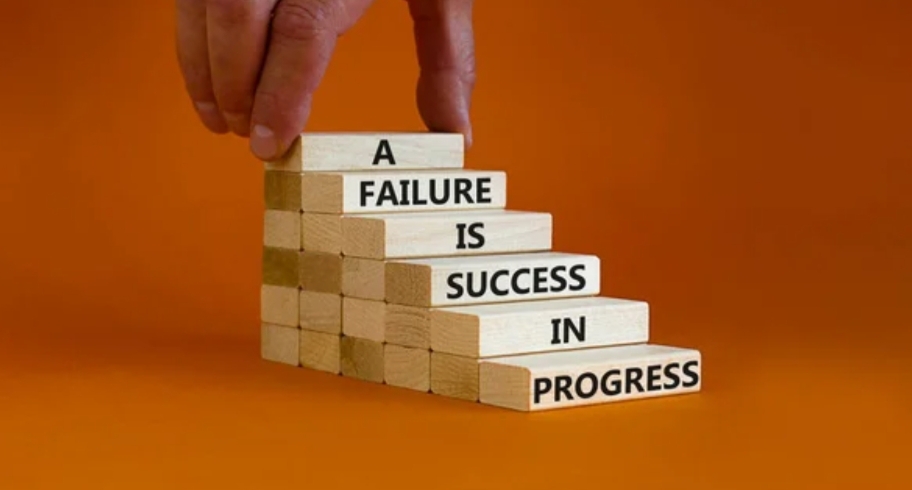
In a world that often measures success by a straight line upward, we tend to view “failure” as a dead end. We treat it like a final grade or a closed door. But if you shift your lens, you’ll find that failure isn’t the opposite of success, it’s the seasoning that gives it flavor. The secret ingredient that prevents a temporary setback from becoming a permanent defeat is resilience.
When I say “resilience will never let you fail,” I don’t mean you’ll never stumble. I mean that with a resilient mindset, the concept of failure as a final state ceases to exist.
The Anatomy of Resilience
Resilience isn’t just toughing it out. It is the psychological elasticity that allows a person to be compressed by stress, grief, or professional disaster and eventually snap back, often stronger than before.
It is built on three core pillars:
Acceptance: Facing the reality of a situation without sugar-coating or denial.
Adaptability: The willingness to pivot when the original plan falls apart.
Purpose: A deep-seated belief that there is a “why” behind the struggle.
Redefining the word “Failure”
The biggest hurdle to success is often the fear of failure. This fear paralyzes innovation and keeps us in our comfort zones. However, resilience changes the definition of the word:
To the brittle mind: Failure is a verdict on one’s worth.
To the resilient mind: Failure is data. It is a feedback loop.
If you try to launch a business and it folds, the brittle person says, “I am a failure.“ The resilient person says, “That business model didn’t work, and now I know exactly why.” As long as you are learning, you haven’t failed, you’ve simply completed a very expensive masterclass in what doesn’t work.
How Resilience Prevents Permanent Defeat
Resilience acts as a safety net for your ambitions. It ensures that your journey is defined by momentum rather than perfection.
It Sustains Energy: Pure willpower is a finite resource. Resilience, fueled by a sense of purpose, acts as a renewable energy source that keeps you moving when the initial excitement fades.
It Encourages Risk: When you know you have the tools to recover from a fall, you’re more likely to climb higher.
It Builds “Mental Callouses”: Much like physical exercise creates micro-tears in muscle that heal back stronger, psychological setbacks toughen your spirit. Every time you bounce back, your recovery time for the next challenge shortens.
Cultivating Your Resilience
You aren’t born with a fixed amount of resilience; it is a muscle you can train. You can start by:
Practicing Reframing: Instead of asking “Why is this happening to me?“ ask “What is this teaching me?”
Building a Support System: Resilience isn’t a solo sport. Knowing when to lean on others is a sign of strength, not weakness.
Focusing on Controllables: In a crisis, ignore the chaos you can’t change and pour your energy into the small actions you can control.
Resilience is the ultimate insurance policy for your dreams. It doesn’t promise a life without storms, instead it promises that you will learn how to sail in the rain. If you refuse to quit, and if you choose to evolve every time life knocks you down, then “failure” becomes impossible. You haven’t lost, you’re just still in the game.
We’ve all been there: the rejected application, the failed project, or the personal goal that slipped through our fingers. In those moments, it feels like the credits are rolling and the story is over. But if you look closer at the grammar of a successful life, you’ll realize that failure is rarely a full stop.
It’s actually a comma, a brief pause, a breath, and a signal that there is more to the sentence.
The Anatomy of the Pause
When we treat failure as a full stop, we stop writing. We close the book and assume the narrative has reached its final conclusion. This mindset leads to stagnation and the fixed mindset.
However, viewing failure as a comma changes the entire structure of your journey:
It provides context: Just as a comma separates ideas to make a sentence clearer, failure clarifies what isn’t working so you can focus on what will.
It builds momentum: A comma implies that something follows. This creates a linguistic cliffhanger that demands a next step.
It allows for recalibration: The pause gives you a moment to breathe, check your surroundings, and decide if you need to change your tone or direction.
Why We Fear the Period
The reason many of us mistake the comma for a full stop is ego. We tend to attach our identity to our results. If the result is a fail, we assume we are a failure.
In reality, history is written in long, complex sentences filled with commas:
Thomas Edison didn’t find a full stop in 1,000 unsuccessful attempts at the lightbulb, he found 1,000 commas.
J.K. Rowling faced twelve rejections before Harry Potter finally found a publisher.
Steve Jobs was fired from the very company he started, a massive comma that eventually led to the creation of Pixar and his triumphant return to Apple.
How to Keep Going
If you find yourself staring at a setback, here is how you ensure it remains a comma:
Acknowledge the Pause: Don’t rush. It’s okay to feel the sting of the setback. A comma is a pause, after all.
Analyze the Syntax: Ask yourself, What is this setback trying to tell me? Is it time to pivot, or just time to try a different approach?
Add the Conjunction: In grammar, we often follow a comma with “and,” “but,” or “so.”
I failed, but I learned a new skill.
The business closed, so I am starting a more lean venture.
I didn’t get the job, and now I know which interview questions to prepare for next time.
Your life is a living document. There will be typos, messy drafts, and plenty of punctuation marks you didn’t plan for. But remember, you are the author. As long as you keep typing, no single mistake has the power to end the story.
The next time you hit a wall, don’t drop the pen. Just add a comma and see what happens next.
We often treat our ideas as if they have intrinsic value. We carry them like hidden treasures, polished by “what-ifs” and protected by the comfort of “someday.” But the harsh reality of progress is simple: An idea, no matter how brilliant, is functionally non-existent until it is acted upon. Thoughts without action does not bear any fruit.
In the economy of achievement, execution is the only currency that matters. Here is why thoughts alone are a hollow pursuit, and how to bridge the gap between the mind and the world.
1. The Trap of Mental Simulation
The human brain is an expert at tricking itself. When we spend hours visualizing a goal, whether it’s starting a business, writing a book, or getting fit, our brain releases dopamine as if we’ve already achieved it. This is often called productive procrastination. We feel like we are moving forward because the mental gears are turning, but we are actually stationary. Without action, thought is merely a form of entertainment like a private movie that never premieres.
2. Knowledge is Potential, Action is Power
You might have heard the phrase that knowledge is power. That is only a half-truth. Knowledge is merely potential energy.
Consider the difference between a person who reads ten books on swimming and a person who jumps into the pool. The reader has the theory, but the swimmer has the skill. The world does not pay you for what you know, it rewards you for what you do with what you know.
3. Feedback Only Exists in Reality
Thought is a closed loop. Inside your head, every plan works perfectly because there is no friction. There is no market volatility, no gravity, and no human error.
Action is a diagnostic tool. When you move from thought to deed, you collide with reality. This collision provides the data you need in order to grow. Without the meaningless first step that fails, you never get to the meaningful tenth step that succeeds.
How to Bridge the Gap: From Thought to Thing
If you find yourself stuck in the cycle of overthinking, use this strategy to break ground. Identify the problem and look for a action oriented solution to resolve that problem. For example, if you are overwhelmed by the scale of the task then apply the 5 minute rule. Commit to the working on the task for just 5 minutes. Starting is the hardest part and starting the task is like already winning half the battle.
Another problem could be that you are stuck in endless planning of the task. The solution for that is make a deadline for the planning. Once the deadline reaches, planning stops and doing the work begins.
At the end of a life, no one tallies up the intentions a person had. History is a record of movements made, words spoken, and structures built.
A good person is not someone who merely thinks kind thoughts, they are someone who performs kind acts. A creator is not someone with a folder of ideas instead they are someone who publishes. To give your life meaning, you must translate the abstract language of the mind into the concrete language of the world. Stop thinking about the path, and start walking it.