
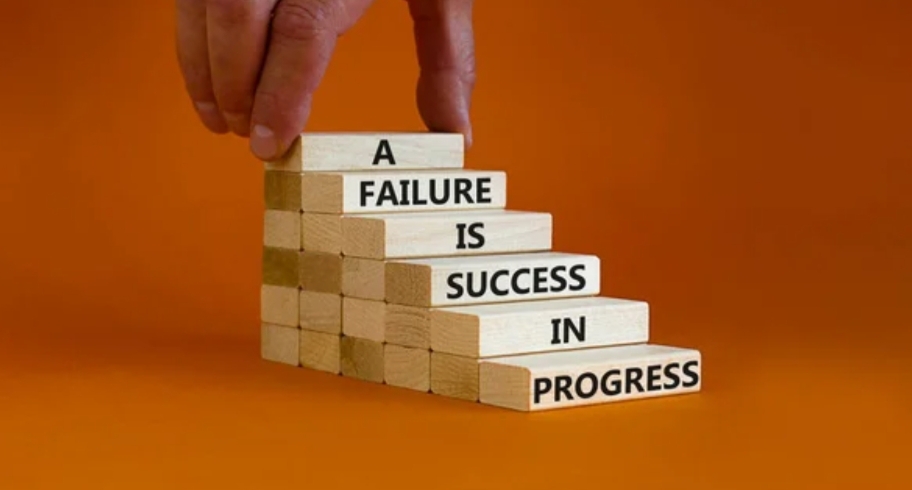
We’ve all been there: the rejected application, the failed project, or the personal goal that slipped through our fingers. In those moments, it feels like the credits are rolling and the story is over. But if you look closer at the grammar of a successful life, you’ll realize that failure is rarely a full stop.
It’s actually a comma, a brief pause, a breath, and a signal that there is more to the sentence.
The Anatomy of the Pause
When we treat failure as a full stop, we stop writing. We close the book and assume the narrative has reached its final conclusion. This mindset leads to stagnation and the fixed mindset.
However, viewing failure as a comma changes the entire structure of your journey:
- It provides context: Just as a comma separates ideas to make a sentence clearer, failure clarifies what isn’t working so you can focus on what will.
- It builds momentum: A comma implies that something follows. This creates a linguistic cliffhanger that demands a next step.
- It allows for recalibration: The pause gives you a moment to breathe, check your surroundings, and decide if you need to change your tone or direction.
Why We Fear the Period
The reason many of us mistake the comma for a full stop is ego. We tend to attach our identity to our results. If the result is a fail, we assume we are a failure.
In reality, history is written in long, complex sentences filled with commas:
- Thomas Edison didn’t find a full stop in 1,000 unsuccessful attempts at the lightbulb, he found 1,000 commas.
- J.K. Rowling faced twelve rejections before Harry Potter finally found a publisher.
- Steve Jobs was fired from the very company he started, a massive comma that eventually led to the creation of Pixar and his triumphant return to Apple.
How to Keep Going
If you find yourself staring at a setback, here is how you ensure it remains a comma:
- Acknowledge the Pause: Don’t rush. It’s okay to feel the sting of the setback. A comma is a pause, after all.
- Analyze the Syntax: Ask yourself, What is this setback trying to tell me? Is it time to pivot, or just time to try a different approach?
- Add the Conjunction: In grammar, we often follow a comma with “and,” “but,” or “so.”
- I failed, but I learned a new skill.
- The business closed, so I am starting a more lean venture.
- I didn’t get the job, and now I know which interview questions to prepare for next time.
Your life is a living document. There will be typos, messy drafts, and plenty of punctuation marks you didn’t plan for. But remember, you are the author. As long as you keep typing, no single mistake has the power to end the story.
The next time you hit a wall, don’t drop the pen. Just add a comma and see what happens next.