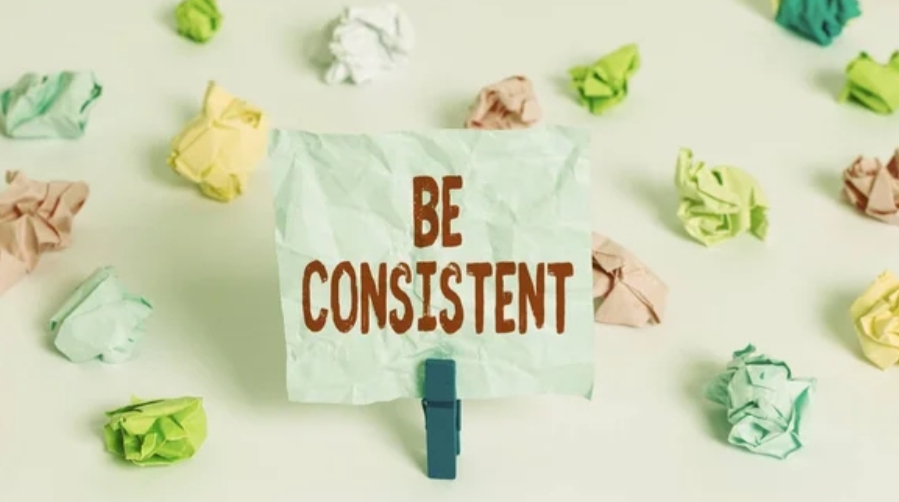
In a world obsessed with hacks, overnight success, and viral moments, we often overlook the most boring yet potent ingredient for success, consistency. While intensity, the massive burst of energy at the start, gets you off the starting line, consistency, the daily showing up, is what actually gets you across the finish line. Whether it’s fitness, finance, or creative work, being consistent changes the trajectory of your life through three powerful mechanisms.
1. The Magic of Compounding
In finance, compound interest is described as the eighth wonder of the world. The same principle applies to your habits. When you do something small every day, the results don’t add up, they multiply.
As James Clear famously noted in Atomic Habits, if you get better at something each day for a year, you’ll end up 37 times better by the time you’re done. Consistency allows small, manageable actions to snowball into massive transformations that would be impossible to achieve in a single sprint.
2. The Transformation of Identity
The greatest barrier to change is often our own self-image. When you are inconsistent, you send a message to yourself that your goals are optional.
However, every time you show up even when you don’t feel like it you are casting a vote for the person you want to become.
Writing one page a day makes you a writer.
Putting away small amount of money every month makes you an investor.
Walking for 20 minutes daily makes you an athlete.
Consistency shifts your mindset from “I’m trying to do this“ to “This is who I am.“
3. Reducing the Cognitive Load
Starting from zero requires an immense amount of willpower. If you only go to the gym once every two weeks, every single visit is a mental battle. You have to decide when to go, what to wear, and how to motivate yourself.
When you are consistent, the behavior moves from the conscious mind to the basal ganglia the part of the brain responsible for habits. It becomes automatic. Consistency effectively automates your success, saving your willpower for more complex decisions.
Strategies to Stay Consistent
If you struggle to stay on track, try these three shifts:
Lower the Bar: If you can’t do 50 pushups, do 5. The goal isn’t the number; it’s the act of not breaking the chain.
Never Miss Twice: Life happens. If you miss a day, that’s an accident. If you miss two days, it’s the start of a new habit. Get back on track immediately.
Track the Streak: Use a simple calendar or app to mark an ‘X’ for every day you complete your task. Visualizing your progress creates a psychological itch to keep the streak alive.
We often overestimate what we can do in a day, but we vastly underestimate what we can do in a year of consistent effort. You don’t need to be the most talented person in the room; you just need to be the one who refuses to stop showing up.
In our pursuit of “the big win”, the promotion, the dream house, or the milestone anniversary, we often treat the intervening moments as mere filler. We wait for the grand note of life to feel a sense of thankfulness, bypassing the quiet melodies that play in the background every single day. However, the secret to a resilient and joyful life isn’t found in the rare, massive shifts, it’s hidden in the practice of micro-gratitude.
The Architecture of Happiness
Psychologically, our brains are wired with a negativity bias. We are evolved to notice the pebble in our shoe or the one rude comment in a sea of compliments. Expressing gratitude for small things acts as a conscious recalibration of this system.
When you acknowledge a small win, the perfect temperature of your morning coffee, a green light when you’re in a hurry, or the way the sun hits a building, you trigger a release of dopamine and serotonin. These are the brain’s natural feel-good chemicals. By doing this repeatedly, you train your brain to scan the world for positives rather than threats.
Why the Little Things Matter Most
They are Sustainable: Huge milestones happen a few times a decade. Small joys happen dozens of times a day. If you only feel grateful for the big stuff then you’re spending 99% of your life waiting to be happy.
They Build Resilience: When life gets difficult, the big things often disappear or feel out of reach. In those dark times, the ability to appreciate a warm blanket or a kind text message becomes a vital lifeline.
They Improve Relationships: Gratitude is social glue. Saying “thank you” to a partner for taking out the trash or to a shopkeeper for a smile validates their effort and strengthens your connection to the community.
How to Practice Micro-Gratitude
You don’t need a fancy journal or an hour of meditation to start. You simply need awareness.
The Three Small Wins Rule: Before bed, identify three tiny things that went well. Not “I got a bonus,” but rather “The air felt fresh today” or “I caught a great song on the youtube.”
Narrate the Moment: When something small goes right, say it out loud or think it clearly: “I really appreciate this quiet moment.”
The “Notice the Ordinary” Challenge: Try to find beauty in something mundane. The engineering of a paperclip, the vibrant color of a piece of fruit, or the reliability of your old sneakers.
The Ripple Effect of Micro-Gratitude
Gratitude is contagious. When you start appreciating the small efforts of others, they feel seen. When you appreciate the small joys of the world, you become a more pleasant person to be around. You stop being a passive consumer of your life and start becoming an active participant in its beauty.
By shifting your focus from what is missing to the abundance of “small enough” things already present, you turn an ordinary Tuesday into a series of quiet victories.
We often treat our goals like a high-stakes trial where we are both the defendant and the judge. We tell ourselves that if we aren’t suffering, we aren’t working hard enough. This “no pain, no gain” mentality frequently morphs into a cycle of self-punishment, where we withhold sleep, social connection, or even basic kindness as a way to fuel our progress. We feel the need to punish ourselves in order to achieve our goals.
But why do we believe that the path to success must be paved with self-inflicted hardship?
1. The Myth of Productive Suffering
Modern culture often glorifies the “grind”, the idea that burnout is a badge of honor. We fall into the trap of believing that pain equals proof. If a task feels easy or if we treat ourselves with compassion, we worry that we are being lazy. In this mindset, self-punishment becomes a metric for how much we care about the goal.
2. Fear as a False Motivator
Many of us use self-punishment because we don’t trust ourselves. We use harsh criticism as a catalyst because we fear that without it, we will lose our momentum.
Psychologically, this is linked to the Yerkes-Dodson Law, which suggests that performance increases with physiological or mental arousal, but only up to a point. When we punish ourselves, we push our stress levels into the “exhaustion” or “breakdown” zone, where performance actually plummets. We think we are motivating ourselves, but we are actually triggering a “freeze” response that leads to procrastination and burnout.
3. The Penance Loop
When we fail to meet a milestone like missing a gym session or blowing a deadline, we feel a sense of debt. We feel we have sinned against our potential. Self-punishment (like forcing ourselves to work 16 hours the next day or skipping a meal) acts as a form of moral penance. We believe that by suffering, we are paying back the debt of our failure so we can start with a clean slate.
4. Perfectionism and the “Not Enough” Wound
For many, the need to punish stems from Conditional Self-Worth. This is the belief that “I am only valuable if I achieve X.” When “X” isn’t achieved, the self is seen as worthless. Punishment is the natural reaction to that perceived worthlessness, it’s an attempt to whip a faulty self into shape.
The Cost of the Internal Whip
While self-punishment can produce short-term results through sheer terror, it is unsustainable. It leads to:
Health Issues: Constant self-criticism keeps the body in a state of high stress, damaging long-term health.
Reduced Creativity: The brain’s creative centers shut down when it feels under attack.
Aversion: Eventually, you will begin to hate the goal itself because your brain associates it with the pain you inflict on yourself.
Shifting to Sustainable Ambition
To break this cycle, we must move from fear based motivation to value based motivation.
Self-Compassion as a Tool: It is believed that people who practice self-compassion are actually more likely to achieve their goals because they recover from setbacks faster than those who wallow in self-punishment.
The Coach vs The Critic: A critic tells you why you’re a failure; a coach acknowledges the mistake and focuses on the technical adjustment needed for the next play.
Reframing Effort: Start viewing rest and kindness not as “rewards” you have to earn, but as required maintenance for the machine that is going to achieve your goals.
We’ve all heard the advice to “work hard,” but hard work alone is a recipe for exhaustion, not success. True achievement comes from applying your effort strategically. If you feel like you’re constantly busy but not moving forward, you might be putting your energy and efforts in the wrong places.
Learning to direct your efforts effectively is the key to maximizing your impact, accelerating your goals, and avoiding the dreaded burnout.
1. Define the Destination First
Before you take a single step, you must know where you are going because, clarity is power. Vague goals lead to scattered effort.
Specify Your Outcome: Don’t just aim to be successful. Define what success looks like for this specific project or area of your life. Is it launching a product? Landing a new client? Finishing a marathon?
The 80/20 Rule: Identify the 20% of activities that will produce 80% of your desired results. Stop spending time on low-impact, time-consuming tasks that only provide minimal return.
Create S.M.A.R.T. Goals: Ensure your goals are Specific, Measurable, Achievable, Relevant, and Time-bound. This framework acts as a GPS for your effort.
2. Identify and Focus on High-Leverage Activities
High-leverage activities are those tasks that, when completed, create a ripple effect, making subsequent work easier or more effective.
The Bottleneck Test: What is the single biggest obstacle preventing you from reaching your goal right now? Put 80% of your energy into removing that bottleneck. Until that roadblock is clear, work on smaller tasks will only pile up behind it.
Master the Core Skill: In any field, there are 1-2 core skills that generate the most value. If you’re a writer, it’s compelling storytelling. If you’re a manager, it’s clear communication and delegation. Invest your time and effort in deep practice of those core skills in order to achieve your goals.
Stop Starting, Start Finishing: A common effort trap is constantly starting new projects. The effort required to complete the last 10% of a task is often disproportionately high, but it’s the only part that delivers value. Practice the discipline of completing tasks before shifting focus.
3. Energy Management Over Time Management
You don’t just have 24 hours in a day; you have different levels of energy and focus throughout that day. The right effort is applied when your energy is at its peak.
Know Your Peak Performance Times: Are you a morning person or a night owl? Schedule your most challenging and important tasks during the 2-3 hours when you know your concentration is the strongest.
Tackle the “Worst First”: Mark Twain famously advised, “Eat a live frog first thing in the morning and nothing worse will happen to you the rest of the day.” Therefore, putting significant effort into your hardest task first prevents procrastination and gives you momentum.
The Power of Rest: Rest isn’t the opposite of effort; it’s a critical component of sustained, quality effort. Bursts of intense work followed by intentional breaks prevent the kind of fatigue that makes your effort sloppy and unproductive. Therefore, take proper rest and keep your body and mind healthy for your goals.
4. Continuous Review and Adjustment
You can’t steer a ship that’s already docked. You must constantly monitor your trajectory to ensure your efforts are still aligned with the goal.
Review Your Inputs vs. Outputs: At the end of the week, look at your to-do list versus your accomplishments. Are you spending all your time on email (input) and getting no key deliverables (output)? If so, pivot your focus.
Seek Feedback: Effort is often wasted when we operate in a vacuum. Ask a trusted peer, mentor, or manager: “What’s the one thing I’m doing right now that is wasting my time?” External perspective can instantly illuminate misdirected energy.
Know When to Quit: Sometimes, the “right place” for your effort is not that task or project at all. If a goal is no longer relevant, the market has shifted, or the cost (in time and energy) outweighs the potential return, the smartest effort is to gracefully let go and reallocate your energy to a more promising venture.
Putting your efforts in the right place is not about magically having more time or more energy; it’s about intelligent allocation. By defining a clear target, focusing on high-leverage activities, respecting your natural energy cycles, and constantly adjusting your course, you transition from being busy to being effective.
Peer pressure is a powerful force that can influence us to make choices—good or bad—simply to fit in with a group. While seeking acceptance is a natural human desire, succumbing to pressure can lead you down paths that conflict with your values, goals, and well-being.
Learning how to navigate and escape peer pressure is a crucial life skill that empowers you to be your authentic self. Here is an actionable guide on how to advocate for yourself and resist the urge to follow the crowd.
1. Know Yourself and Your Value
The strongest shield against peer pressure is a solid sense of self. When you are clear about who you are and what you stand for, it becomes much easier to say “no” to things that don’t align with your identity.
Define Your Non-Negotiables: Identify the things you will not compromise on, such as academic goals, health habits, ethical boundaries, or personal safety. Write them down if it helps solidify them in your mind.
Establish Your Goals: When you have a clear vision for your future, any activity that distracts or derails you (like skipping class or engaging in risky behavior) becomes easier to reject.
Acknowledge Your Feelings: If a situation feels wrong, listen to that internal discomfort. Trust your gut feeling; it’s often a powerful indicator that you are moving against your own best interests.
2. Practice Saying ‘No’ with Confidence
The moment of pressure can be intense, but having a response prepared can make all the difference. Remember, you don’t owe anyone a lengthy explanation
Deliver your ‘No‘ confidently, using a clear voice and maintaining eye contact. Hesitation can invite more pressure.
3. Choose Your Peers Wisely
The environment you place yourself in is the single greatest predictor of the pressure you will face. Therefore, surround yourself with people who lift you up and respect your decisions.
Seek Out Supportive Friends: Prioritize friendships with people who share your positive goals, encourage your healthy habits, and value your individuality.
Evaluate Your Current Circle: Ask yourself: Do I feel good about myself when I’m around these people? Do they encourage me to break my boundaries? If the answers are negative, it may be time to create some distance.
Be a Positive Peer: You can become a source of strength for others. By consistently making positive choices, you set an example and change the dynamic of your group.
4. Develop Resilience and Self-Worth
Peer pressure thrives on your fear of missing out (FOMO) and the need for external validation. Therefore, building internal resilience helps neutralize these fears.
Reframe Rejection: Getting teased or excluded because you said ‘no’ is not a personal failure; it’s confirmation that you stood up for yourself. The temporary sting is far better than the long-term regret of violating your values.
Understand True Friendship: A true friend will respect your decision, even if they disagree with it. Anyone who attempts to manipulate, ridicule, or threaten you into doing something is not acting as a friend.
Focus on Internal Approval: Your worth is not determined by how many parties you attend or how much your peers approve of you. Build your self-esteem by achieving personal goals and living authentically.
Your Life, Your Choice
Escaping peer pressure is not about being a social outcast; it’s about being in control of your own life. It requires courage, self-awareness, and the ability to tolerate temporary discomfort for long-term well-being.
By defining your values, practicing confident refusal, and choosing supportive peers, you will successfully navigate social challenges and build a life that you are truly proud of.
In a world that often celebrates luck and timing, a fundamental truth often gets overlooked: opportunities are not mystical gifts to be awaited, but powerful currents to be actively generated. The passive mindset of waiting for the ‘perfect break’ is a recipe for stagnation, placing the control of your destiny in the hands of external forces. The successful, the innovators, and the trailblazers all share a common philosophy: they don’t wait for opportunity, they create one.
The Risks of Passivity
The waiting game is fraught with pitfalls. When you rely solely on external validation or favorable circumstances, you become a spectator in your own life.
Loss of Control: Waiting shifts the power dynamic. Your progress is tied to someone else’s decision, a market shift, or a chance encounter that may never happen. This can lead to frustration and a sense of helplessness.
Missed Potential: Time spent waiting is time lost from working. The perfect opportunity rarely announces itself with a flourish; it is often the result of relentless preparation meeting a self-made moment.
The Illusion of Scarcity: Opportunities are not limited commodities. A passive mindset views the world as having a fixed pie of chances, whereas a creator’s mindset sees infinite possibilities waiting to be unlocked.
Make a Proactive Mindset
Creating opportunities is a deliberate, proactive process rooted in continuous action and self-improvement. It is about becoming the architect of your own future.
1. Embrace the DIY Attitude: The Entrepreneurial Spirit
Every great venture, idea, or career path started with someone spotting a gap and deciding to fill it. Entrepreneurs don’t wait for a market need; they identify an unstated problem and build the solution.
Identify a Need: Look around you. What problem frustrates you or others? That pain point is a latent opportunity.
Start Small, Start Now: Don’t let the pursuit of a flawless plan paralyze you. The most important step is the first one. Begin with a prototype, a small project, or a new skill. You will iterate and improve along the way.
2. Continuous Learning and Skill Development
Your value is directly proportional to your skillset. Investing in yourself is the most reliable way to create opportunities, as new skills open doors that were previously locked.
Become Indispensable: The more unique and valuable your skills are, the less you have to wait for someone to need you.
Adaptability is Key: In a rapidly changing world, those who constantly learn and adapt are the ones who can spot and pivot into new opportunities as they emerge.
3. Strategic Networking and Relationship Building
Opportunities often travel through people. Building a genuine and supportive professional network is not just about collecting business cards; it’s about forming mutually beneficial relationships.
Seek Mentorship: Connect with people further along the path you wish to take. Their insights and connections can illuminate potential avenues you hadn’t considered.
Offer Value First: Approach networking with a mindset of what you can give, not just what you can get. Generosity in sharing knowledge and support often comes back to you as a created opportunity.
4. Transform Challenges into Stepping Stones
The ability to see a crisis or a problem as an opportunity for growth is the hallmark of a creator. A challenge is a test that, when passed, proves your capability and competence, often leading to advancement.
Ask ‘How Can I?’: Instead of saying, “I can’t do this,” shift your internal dialogue to, “How can I solve this problem?” This simple change in perspective unlocks creative problem-solving.
Embrace Failure as Feedback: Every setback is a data point. It tells you what didn’t work, allowing you to refine your approach and get closer to creating the breakthrough you seek.
Your Destiny is Not a Waiting Room
The belief that a perfect opportunity will suddenly materialize is a myth that keeps countless brilliant people stuck in neutral. The true path to success, fulfillment, and meaningful impact lies in seizing agency—in moving from a posture of waiting to a mindset of making.
Your job, your business, your dream life—none of it is going to be handed to you. It is your right and your responsibility to be the force that generates the chances you desire. Stop waiting for the door to open. Go find some lumber, some tools, and start building your own.
In workplaces, social circles, and even families, there often exists a subtle, unwritten commandment: “Do well, but not better than them.” This isn’t a rule posted on a bulletin board, but a deeply ingrained cultural and psychological phenomenon that dictates how high one can rise without triggering discomfort, resentment, or even sabotage from peers, colleagues, or superiors. It’s the invisible ceiling imposed not by capability, but by the ego of others.
The Psychology Behind the Constraint
Why does this dynamic exist? It stems from a primal human need for social standing and equilibrium. When someone excels dramatically, it disrupts the established hierarchy and forces those around them to confront their own perceived shortcomings.
The Threat of Comparison: High achievement, especially sudden success, serves as a harsh mirror. For people already struggling with self-worth or insecurity, your superior performance feels like a direct indictment of their own efforts.
The Zero-Sum Fallacy: In many environments, success is viewed through a zero-sum lens—if you win big, it must mean I lose ground. This is particularly true in competitive corporate settings or within scarcity mindsets.
The “Crab Mentality”: This widely recognized phenomenon describes a group of crabs in a bucket. While any one crab could easily escape, the others will inevitably pull it back down, ensuring none can break free. Human dynamics often mirror this, where fear of being left behind drives people to limit the success of others.
The “Do well, but not better” Dilemma for the Ambitious Individual
For those driven to truly excel, the “Do Well, But Not Better” rule presents a genuine ethical and professional dilemma: Do you dim your light for comfort, or shine brightly and risk the fallout?
1. The Self-Sacrifice: Some individuals unconsciously self-limit. They under-deliver on projects, downplay their achievements, or avoid taking on highly visible tasks to keep the peace and remain liked. This protects their social capital but stifles their potential.
2. The Calculated Move: The most successful professionals learn to excel strategically. They understand that achievement is necessary, but managing the perception of achievement is paramount.
They’ll allow a mentor to take public credit for a key insight.
They strategically delegate a high-profile task to a struggling colleague who needs a win.
They frame their successes as a collective victory for the team or the company.
Mastering the Dance: How to Truly Thrive
The goal is not to stop being successful, but to become a different kind of successful person—one whose rise lifts others rather than casts a shadow.
Be a Bridge, Not an Island: Success that is shared is less threatening. Use your knowledge and connections to mentor, coach, and open doors for others. When others succeed because of your help, their resentment fades, and they become allies.
Focus on Contribution, Not Status: Reframe your ambition away from personal glory like, “I won the award” towards measurable positive impact like., “The team achieved a 20% efficiency gain”.
Humility and Gratitude are Essential Lubricants: Acknowledge the help you received, express genuine thanks, and be publicly grateful for your team. An arrogant winner is a target; a humble one is an inspiration.
Know Your Audience: Understand who is supportive and who is threatened. Share your struggles with the former and only your results with the latter.
Ultimately, navigating the “Do Well, But Not Better Than Them” dynamic is a lesson in emotional intelligence and social mastery. True success isn’t just about achieving goals; it’s about doing so in a way that allows you to sustain that success without becoming isolated. You must learn to shine so brightly that others want to wear sunglasses and celebrate you, not try to blow out your flame.
Life is a perpetual forward motion. From the moment we are born, we are constantly progressing—growing, learning, evolving. Yet, this inherent progress, while necessary and often exhilarating, comes with an undeniable truth: when you move ahead, something gets left behind.
This isn’t a statement of regret, but a recognition of the fundamental mechanics of change and growth. Every step into a new future requires a separation from a former present.
The Inevitable Cost of Growth
The things we leave behind are not always material. More often, they are intangible yet profound:
Past Selves: The ‘you’ of five years ago, with their specific beliefs, habits, and insecurities, must be left behind for the ‘you’ of today in order to emerge. This past self, perhaps simpler or less burdened, becomes a memory necessary for the current iteration in order to thrive.
Comfort Zones: Advancing in a career, starting a new venture, or relocating to a new city means stepping out of familiar, safe territory. The comfort and predictability of the old zone are sacrificed for the potential and uncertainty of the new one.
Relationships and Connections: As our paths diverge, certain friendships, associations, or even relationships fade. This might be due to geographical distance, a change in priorities, or simply the realization that some people were meant for a specific chapter, not the whole book.
Old Dreams and Expectations: Sometimes, moving forward means acknowledging that a long-held dream is no longer the right one, or that a cherished expectation must be revised. The freedom of the new path is purchased with the acceptance that the old vision is now obsolete.
The Weight of Nostalgia and the Value of Letting Go
The act of leaving things behind often carries a mix of emotions—a tinge of nostalgia for the innocence of youth, the ease of a simpler time, or the vibrancy of a lost connection. This feeling is natural and important as it allows us to honor the past without being tethered to it.
However, the key to truly moving ahead is to differentiate between honoring and clinging.
Clinging to what is left behind is the anchor that prevents progress. It manifests as perpetual ‘what ifs,’ a fear of change, or an inability to embrace the opportunities of the present moment.
Letting Go is the essential act of acknowledging the value of the past—what it taught us. How it shaped us—and then willingly placing it in the realm of memory. Therefore, it is a necessary shedding, like a snake shedding its skin to allow for growth.
Making the “Left Behind” a Foundation
The things we leave behind are never truly gone; they transform into the foundation upon which our new reality is built.
The struggles of the past inform the resilience of the present. The relationships we outgrew taught us how to connect deeply. The mistakes we made are the hard-won wisdom that guides our future decisions.
Embracing this reality means accepting that the void created by what is left behind is not an emptiness to be feared, but a space to be filled with new experiences, people, and growth.
Moving ahead is not about escaping the past; it is about integrating its lessons while shedding its limitations. It is a conscious choice to carry the essence of our journey forward, even as the form and circumstances change. In the end, the beautiful paradox of life is that we can only truly appreciate where we are going by occasionally glancing back and acknowledging, with gratitude, everything and everyone we had to leave behind.
In the journey of life, we often encounter situations that challenge our comfort, values, and sense of self-worth. It might be a demanding boss, a dismissive colleague, a critical family member, or even a subtle social dynamic. In all these moments, one skill proves invaluable: the ability to stand up for yourself. This isn’t about aggression or conflict; it’s about self-respect, setting boundaries, and asserting your inherent value.
The Power of Assertiveness
Standing up for yourself is essentially practicing assertiveness. Assertiveness is the sweet spot between passivity (allowing others to infringe on your rights) and aggression (infringing on the rights of others). It means expressing your thoughts, feelings, and needs clearly, honestly, and respectfully, while still acknowledging the rights of others.
It’s about Voice: When you stand up for yourself, you give voice to your genuine needs and beliefs. This prevents resentment from building and ensures your well-being isn’t sacrificed for the comfort of others.
It’s about Boundaries: Clear boundaries are essential for healthy relationships and mental health. Hesitating to speak up allows others to cross these lines. Therefore, it leads to stress and exploitation. Asserting yourself helps you establish and maintain those critical limits.
It’s about Self-Respect: Every time you successfully advocate for yourself, you send a powerful message to your subconscious: “I matter.” This consistently reinforces your self-esteem and encourages others to treat you with the same respect.
Overcoming the Hesitation Hurdle
Why do people hesitate? The reasons are deeply rooted in social conditioning and fear:
Fear of Conflict: Many people are “conflict-avoidant” and believe that agreeing, even when they disagree, is the path of least resistance.
Fear of Rejection/Disapproval: The worry that asserting a need will make others dislike them, criticize them, or even leave them.
The “Good Person” Trap: A mistaken belief that being a “good” or “nice” person means always prioritizing the needs of others over their own.
To overcome this, reframe the act: Standing up for yourself is an act of self-care, not selfishness. It’s about honesty and integrity—being true to yourself first.
Practical Steps to Stand Tall
Developing this skill takes practice and courage. Here are ways to confidently assert yourself:
Know Your Rights: Recognize that you have a right to your own feelings, opinions, and needs. You have the right to say “no” without guilt, and the right to be treated with respect.
Use “I” Statements: Frame your concerns around your feelings, rather than attacking the other person. Instead of, “You always interrupt me,” try, “I feel unheard when I am interrupted, so I need to finish my thought.”
Be Clear and Direct: Avoid rambling or apologizing unnecessarily. State your point concisely and firmly. For example, if you can’t take on more work, a simple “I appreciate the offer, but my current workload is full and I need to prioritize what I have,” is sufficient.
Practice in Low-Stakes Situations: Start small. Practice asking for what you want at a restaurant (e.g., a specific table or modification to a dish) or correcting a small error. Build the muscle of assertiveness gradually.
Master the Pause: When confronted or asked to do something you don’t want to do, don’t rush to answer. Take a breath and say, “Let me think about that and get back to you.” This gives you time to formulate a thoughtful, assertive response.
The Ripple Effect of Self-Advocacy
When you stand up for yourself, the positive effects radiate outward. You gain credibility because people learn what your expectations are. You feel more authentic because your actions align with your internal beliefs. Most importantly, you teach others how to treat you.
Never hesitate to stand up for yourself. Your voice is important, your boundaries are sacred, and your well-being is non-negotiable. Your silence will not protect you; but your voice will empower you.
In a world that often worships outcomes—quarterly gains, titles, awards, and the next big achievement—the idea that success without peace of mind is worthless may sound like a melodramatic sermon. Yet there is a deep truth beneath it: genuine success is not merely what you accumulate in your bank account or on your resume, but the quality of your inner life as you pursue your goals. When peace of mind is missing, achievement can hollow out the soul, leaving you with a trophy and a tired heart.
The two halves of success: external metrics and internal steadiness
External success is tangible. It measures into the market, the classroom, or the stage. It signals competence, ambition, and the ability to turn ideas into results. Internal peace, by contrast, is quiet and continuous. It’s the sense that your thoughts are aligned with your actions, that you are not chasing the next thing at the expense of the present, and that you can weather setbacks without spiraling into fear or chaos.
When these two halves diverge—when you sprint toward a goal while your mind is frenzied, exhausted, or disconnected from your deepest values—success becomes brittle. A promotion may bring temporary validation, but if it’s accompanied by sleep deprivation, strained relationships, or constant anxiety, its net value diminishes. In the long run, the price of success without inner peace is often burnout, poor decisions, and a degradation of what you were trying to achieve in the first place.
Why peace of mind matters for durable success
Decision quality improves. Calm attention supports clearer thinking, better risk assessment, and fewer impulsive moves. In high-stakes moments, a mind at ease is less prone to cognitive biases driven by fear or ego.
Sustained energy, not just bursts. Peace of mind comes with rest, boundaries, and a healthy pace. This sustains motivation and performance over weeks, months, and years, rather than producing a short-lived spike followed by collapse.
Relationships matter. Leadership, teamwork, and personal influence rely on trust and connection. When your inner state is unsettled, relationships fray, collaboration suffers, and opportunities slip away.
Creativity follows stillness. Paradoxically, innovation often emerges when the mind isn’t spinning in overdrive. Quiet time and mental space allow ideas to incubate and mature.
Meaning and resilience. A life driven by purposeful aims—and the peace that comes from living in line with those aims—builds resilience. You can endure setbacks, learn from them, and keep moving forward.
The cost of success without peace of mind
The hollow victory of perpetual hustle. Some pursue more titles, more money, or more influence, only to find that the relentless pace erodes health, sleep, and relationships. The same person who seems to “have it all” may carry a chronic sense of restlessness or a gnawing fear of losing what they built.
The anxiety of staying on top. Maintaining high performance under constant scrutiny can generate chronic stress. The fear of failure, the need to prove oneself, and the pressure to outpace competitors can become a perpetual anxiety loop.
The erosion of values. In some cases, the methods used to achieve success conflict with deeper values—honesty, fairness, loyalty. When the gap between actions and values grows, peace evaporates and pride falters.
The cost to health. Sleep deprivation, poor nutrition, and limited downtime take a toll on mental health. Even when achievements accumulate, terrible mood, irritability, and diminished cognitive function can undermine future opportunities.
How to cultivate peace of mind while pursuing success
Clarify your north star. Define not only what you want to accomplish but why it matters to you at a core level. A clear sense of purpose provides a compass when choices become difficult and prevents you from drifting toward “more” for its own sake.
Align actions with values. Regularly check that your daily routines reflect your stated values. When there’s misalignment, adjust, or reframe goals so they fit your principles rather than tempt you away from them.
Build sustainable boundaries. Protect sleep, personal time, and healthy relationships. Learn to say no and delegate. A lightweight but reliable structure often beats heroic but exhausting bursts of effort.
Practice present-mocused strategies. Techniques like mindfulness, breathing exercises, or short pauses before important decisions help keep your mind calm and centered.
Prioritize rest and recovery. Treat rest as a productivity tool, not a luxury. Consistent sleep, physical activity, and time away from screens recharge cognitive resources and mood.
Treat failure as feedback. Resilience grows when you reinterpret setbacks as information for learning rather than verdicts on your worth. This mindset reduces fear and preserves inner peace.
Cultivate gratitude and reflection. Short daily practices—what went well, what you’re grateful for, what you’ll improve—bolster mood and keep you grounded in reality.
Foster supportive relationships. Surround yourself with people who challenge you kindly, hold you accountable, and provide honest feedback. Strong social ties are a pillar of mental health and sustainable success.
Redefine success. Consider success as a composite of outcomes and process. Metrics matter, but so do well-being, integrity, and the quality of your daily life. A revised definition often reduces the pressure to chase unhealthy extremes.
Create micro-systems, not miracles. Build routines that scale with your life: consistent sleep windows, morning planning rituals, weekly reviews, and regular time for rest. Small, reliable habits outperform sporadic genius.
When it’s okay to chase more now and slow down later
There are times when aggressive pursuit of success is appropriate or even necessary—during a pivotal career transition, a strategic business launch, or critical personal circumstances. In those moments, the goal is to move decisively while preserving the capacity for peace beyond the sprint. The trick is to design the sprint so it doesn’t become a lifelong sprint. Set explicit end points, negotiate post-sprint recovery, and ensure you have a plan to restore balance after the peak.
A practical framework for balancing ambition with inner calm
Define a success portfolio: list three to five external aims (e.g., revenue target, product milestone) and three to five internal aims (e.g., sleep target, weekly date night, hours of meditation). Ensure both sides of the portfolio are nourished.
Schedule peace as a non-negotiable item. Put it in your calendar just like meetings. If something conflicts with this time, revisit the priority.
Use value-based decision points. Before major choices, ask: Does this move me closer to my north star? Does it compromise essential values or peace-of-mind that I want to protect?
Conduct periodic audits. Monthly or quarterly, review what success has felt like emotionally and mentally. Adjust goals, routines, or boundaries based on what you learn.
A final reflection
Success, in its richest sense, includes not only outcomes but the steadiness of a mind that can enjoy, endure, and contribute. Peace of mind is not a luxury to be sacrificed on the altar of achievement; it is a foundational resource that makes achievement meaningful, repeatable, and sustainable. When your inner life is aligned with your external efforts, you don’t just accumulate success—you cultivate a life in which success remains fulfilling across time.
If you’re starting today, consider this simple invitation: pick one area where you want more peace this week. It could be better sleep, a shorter workday, a boundary with emails after hours, or a daily moment of stillness. Then pair that peaceful practice with one tangible professional goal. Observe how the two progress together over seven days, and adjust. Small, consistent steps toward inner calm can transform not just how much you achieve, but how deeply you experience the journey.