Patience is Necessary for Growth

patience is necessary for growth

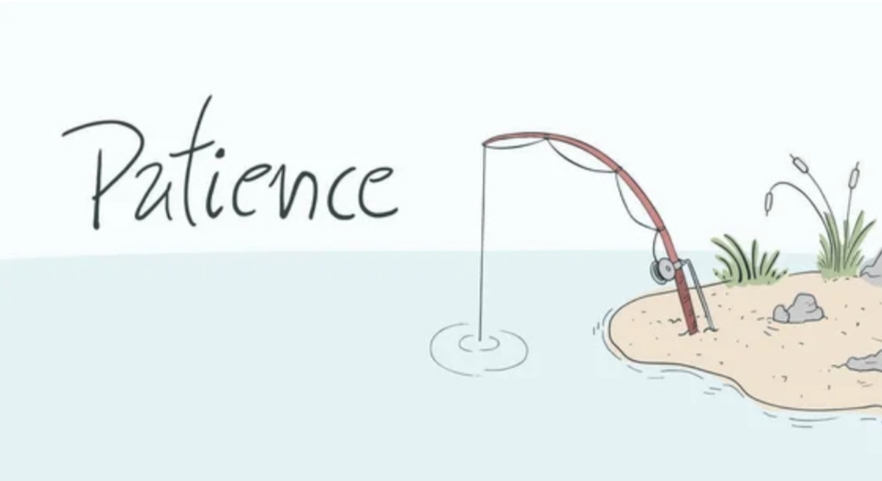
We live in an era of instant gratification. We stream movies in seconds, get groceries delivered in minutes, and expect our career or personal milestones to hit with the speed of a high-speed internet connection. But nature and human psychology operate on a completely different timeline. The uncomfortable truth is that true, sustainable growth cannot be hacked. Whether you are building a business, mastering a skill, healing from trauma, or cultivating a relationship, patience isn’t just a virtue, it is the very infrastructure required for development.

1. The Iceberg Effect of Success

When we look at successful people, we are usually looking at the final product: the thriving business, the shredded physique, or the published novel. What we don’t see is the years of invisible foundation-building.

  • The Chinese Bamboo Analogy: For four years, a Chinese bamboo tree shows no visible growth above ground. It requires daily watering and care. To an outsider, it looks like a failure. But in the fifth year, it shoots up eighty feet in just six weeks.
  • The Reality: The tree wasn’t idle for four years, it was growing a massive root system capable of supporting its impending height. Patience is the period where you build your roots.

2. Mastery Requires Cognitive Slowness

In a rush to get to the finish line, we often bypass the deep, repetitive practice required for mastery. According to neuroscientists, learning a new skill involves building neural pathways and coating them in myelin, a substance that allows signals to move faster and more efficiently.

Growth takes repetition. You cannot rush the physical rewriting of your brain. Rushing leads to shallow understanding and sloppy execution. Patience allows you to slow down, make mistakes, correct them, and cement true capability.

3. Resilience is Forged in the Waiting Room

If growth happened overnight, we wouldn’t develop the emotional maturity required to sustain it.

  • Handling Failure: When progress is slow, you are forced to confront setbacks, boredom, and doubt.
  • Character Building: Navigating these hurdles builds emotional resilience.
  • The Takeaway: If you get everything you want immediately, the first major storm will blow your house down. Patience teaches you how to weather the wind.

Embracing the Slow Burn

If you feel like you are working hard but standing still, remember that delay is not denial. You are likely in the “root-building” phase of your journey.

Shift your focus from the horizon to the step right in front of you. Trust the process, embrace the boredom of daily repetition, and give yourself the grace of time. The grandest structures require the deepest foundations, and those take time to pour.

Avoid Self-Pity For a Better Life

avoid self-pity for a better life

We have all been there. A major project falls apart, a relationship ends, or life throws a sequence of unfair obstacles your way, we get lost in the sea of self-pity, and a small voice whispers: Why does this always happen to me?

In the immediate aftermath of a setback, feeling hurt is entirely natural. But there is a sharp dividing line between genuine grief and self-pity. While grief is a necessary process that helps you digest pain, self-pity is a loop. It invites you to pull up a chair, get comfortable, and adopt helplessness as an identity.

If you want a better, more resilient life, learning to recognize and dismantle self-pity is one of the most powerful shifts you can make.

Why Self=Pity Feels So Addictive

To beat self-pity, you first have to understand why your brain likes it. Self-pity is a coping mechanism, but a destructive one. It offers a few seductive, temporary rewards:

  • It removes responsibility: If you are entirely a victim of circumstance, you don’t have to face the terrifying pressure of figuring out what to do next.
  • It demands low effort: Venting about how unfair life is takes significantly less energy than dusting yourself off and making a new plan.
  • It seeks cheap validation: It loops other people into your drama, seeking comfort without offering a path toward resolution.

The problem is that self-pity operates like an emotional quicksand. The longer you sit in it, the heavier you get, and the harder it becomes to move. It convinces you that your situation is permanent, pervasive, and completely out of your control.

The Hidden Cost to Your Life

Living in a state of perpetual self-pity doesn’t just make you unhappy, it actively shrinks your world.

First, it ruins relationships. Contentment is attractive, constant grievance is exhausting. Friends and family want to support you through tough times, but if every conversation becomes a black hole of complaints where advice is ignored, people will eventually pull away.

Second, it kills agency. When you believe life happens to you rather than with you, you stop looking for opportunities. You miss open doors because your eyes are fixed firmly on the floor.

How to Trade Self-Pity for Action

Breaking the habit of self-pity doesn’t mean you have to suppress your emotions or pretend everything is perfect. It’s about changing how you process reality.

1. Shift from “Why” to “What”

When something goes wrong, the instinctive question is Why me?” This is a useless question because it looks backward and demands an explanation from an indifferent universe. Instead, force yourself to ask: “What can I do with this right now?” This shifts your brain from victim mode to problem-solving mode.

2. Practice “Aggressive Gratitude”

Self-pity survives by hyper-focusing on what is missing or broken. Gratitude is the direct antidote. This isn’t toxic positivity, it’s a rigorous evaluation of reality. Even on a terrible day, if you have a roof over your head, clean water, or a friend who answers your text, you have resources. Notice them.

3. Take One Micro-Action

Self-pity thrives on overwhelm. When a problem feels too big to solve, you freeze. Break the paralysis by taking an action so small it feels almost silly. Clean your desk. Send one email. Go for a ten-minute walk. Action generates momentum, and momentum destroys helplessness.

You cannot always control what happens to you, but you are entirely responsible for how you respond. Pain is inevitable; staying parked in a state of pity is a choice.

Choosing to drop self-pity isn’t about being cold or denying your struggles. It’s an act of deep self-respect. It’s deciding that your life, your potential, and your future peace are far too valuable to waste on a story where you are just a helpless bystander.

Don’t be too available all the time

Appreciate Your Small Victories

appreciate your small victories

We live in a culture obsessed with the “grand finale.” We celebrate the massive promotion, the marathon finish line, the publication of the book, or the buying of the house. We wait for these monumental milestones to give ourselves permission to appreciate ourselves and feel successful.

But here is the cold, hard truth: if you only celebrate the mountaintops, you are going to spend 99% of your life feeling like you’re stuck in the valleys.

The secret to sustained happiness, avoiding burnout, and actually reaching those massive goals isn’t brute force. It is the practice of noticing and appreciating your small victories.

The Neuroscience of the “Micro-Win”

Appreciating small victories isn’t just fluffy, self-help advice, it’s brain chemistry.

Every time you recognize a success, your brain releases a hit of dopamine, the neurotransmitter responsible for motivation and pleasure.

  • When you achieve a massive goal, you get a massive dopamine spike.
  • However, those spikes are rare.

By actively acknowledging smaller milestones, like clearing out your inbox, making a healthy lunch, or finally making that awkward phone call, you trigger smaller, more frequent releases of dopamine. This creates a progress loop. The good feeling motivates you to take the next step, which leads to another small win, which keeps the momentum going.

The Progress Principle: Researches have found that of all the things that can boost emotions and motivation during a workday, the single most important is making progress in meaningful work, no matter how small that progress might seem.

Why Small Wins Matter

1. They Build Unshakeable Confidence

Confidence isn’t something you magically wake up with, it’s built on a track record of kept promises to yourself. When you acknowledge that you completed a 10-minute workout or read five pages of a book, you are proving to your subconscious that you are someone who gets things done.

2. They Neutralize the Negativity Bias

As humans, we are evolutionarily wired to focus on what went wrong. You could have nine great interactions in a day and one bad one, and you’ll lie awake thinking about the bad one. Actively hunting for small victories forces your brain to scan the environment for positives, effectively retraining your mind to see progress over perfection.

3. They Make the Journey Sustainable

Big goals take time. If your happiness is tied exclusively to the end result, you will burn out long before you get there. Appreciating the small steps turns a grueling marathon into a series of manageable, rewarding sprints.

How to Practice “Victory Spotting”

Shifting your mindset to appreciate the small stuff takes practice. Here are a few ways to build the habit:

The “Got-Done” List: Instead of just looking at what’s left on your To-Do list, write down everything you actually accomplished at the end of the day.

Micro-Rewards: Pair a small, mundane victory with a moment of genuine appreciation or a tiny treat.

Change Your Definition: Redefine what a “win” looks like on hard days. Showing up is often enough.

The big breakthroughs we envy in others are almost always just the compounding interest of tiny, unnoticed daily victories.

Don’t wait until you reach the destination to be proud of yourself. Look back at the last 24 hours. Did you learn something? Or Did you try again after a setback? Did you choose kindness over frustration?

If you did, raise a glass or a coffee mug. You’re winning more than you think.

Great things always take time

Small Habits that Make Big Impact

small habits that make big impact

We often convince ourselves that massive success requires massive action. We pressure ourselves to make some earth-shattering improvement that everyone will talk about. Whether it’s losing weight, building a business, or writing a book, we chase the grand gesture. But if you look closely at the people who actually sustain success, health, and happiness, you’ll find that their secret isn’t a single, heroic effort. It’s a collection of tiny, seemingly insignificant daily habits.

But here is the truth: True change doesn’t come from a single seismic shift. It comes from the compounding interest of hundreds of small decisions.

Just as a single snowflake can eventually trigger an avalanche, tiny, seemingly insignificant habits can completely reshape your life. Here is how the domino effect works, and the small habits you can start today that yield the highest returns.

The Math of Marginal Gains

If you can get just 1% better each day for one year, you’ll end up thirty-seven times better by the time you’re done. Conversely, if you get 1% worse each day, you’ll decline nearly down to zero. What starts as a small win or a minor setback accumulates into something much more

4 Micro-Habits with Macro Rewards

You don’t need to overhaul your entire routine by tomorrow morning. Instead, try anchoring just one or two of these micro-habits into your daily life.

1. The One-Minute Rule for Mental Clarity

The rule is simple: If a task takes less than a minute to complete, do it immediately.

  • Put your shoes in the closet.
  • Reply to that one-word email.
  • Hang up your jacket.

Why it works: Procrastination thrives on friction. By clearing out these micro-tasks in real-time, you prevent them from piling up into a daunting mountain of visual and mental clutter. A clean environment leads to a clear mind.

2. The 5-Minute Morning Brain Dump

Before you open social media, grab a coffee, or look at your work inbox, spend five minutes writing down whatever is in your head. It could be a to-do list, a lingering anxiety, or things you’re grateful for.

  • Step 1: Write down the absolute top priority for the day.
  • Step 2: List 2-3 secondary tasks.
  • Step 3: Purge any stressful thoughts onto the paper and let them go.

This acts as an external hard drive for your brain, lowering cortisol levels and giving you a intentional roadmap for the day ahead.

3. Habit Stacking

Trying to build a new habit out of thin air is incredibly difficult because your brain hasn’t built the neural pathways for it yet. Habit stacking solves this by anchoring your new habit to an existing, deeply ingrained one.

By piggybacking on a routine your brain already does automatically, you drastically increase the likelihood of success.

4. Protect Your First and Last 30 Minutes

How you start and end your day sets the tone for your entire existence. Unfortunately, most of us begin and end our days the same way, that is staring at a smartphone screen.

  • The Morning: Checking emails or social media the moment you wake up forces your brain into a reactive state, hijacking your focus and spiking cortisol levels. Instead, spend the first 30 minutes offline, stretch, drink water, or just sit quietly.
  • The Evening: The blue light from screens suppresses melatonin production, ruining your sleep quality. Swapping your phone for a book or a meditation session 30 minutes before bed ensures deeper, more restorative rest.

The “Five-Second” Pause Before Responding

In a fast-paced world, we are conditioned to react instantly. When someone cuts us off in traffic, fires off an annoying email, or makes a passive-aggressive comment, our primal brain wants to strike back.

Cultivating a five-second pause before you speak, type, or react shifts control from your emotional amygdala to your logical prefrontal cortex. Take one deep breath before answering that email. Pause before correcting your partner.

  • The Impact: This tiny gap between stimulus and response is where your freedom lies. It prevents burned bridges, saves you from embarrassing outbursts, and also builds an aura of emotional intelligence and calm authority.

Focus on the System, Not the Goal

Losers and winners often have the exact same goals. Every athlete wants the gold medal; every entrepreneur wants a successful business. What separates them is their systems, the collection of small habits they execute daily.

You don’t rise to the level of your goals, you fall to the level of your systems. Stop worrying about making massive changes today. Pick just one micro-habit from this list, commit to it for the next two weeks, and watch how the domino effect transforms your life.

How to Be In Charge of Your Own Life

When You Are at the Verge of Giving up

when you are at the verge of giving up

There is a specific kind of silence that happens when you reach the end of your rope. It’s not peaceful, it’s heavy. It’s the moment after months of trying, crying, or working yourself to the bone, where you are at the verge of giving up and your mind whispers a single, seductive word: Quit.

Being on the verge of giving up is a lonely, exhausting place to be. Whether it’s a career path that feels dead-end, a relationship that drains you, a creative project that has stalled, or a mental health battle that feels uphill, hitting the wall is a universal human experience.

But standing on that edge doesn’t mean you have to jump. Sometimes, the verge of giving up is actually the threshold of a breakthrough.

1. Rest Instead of Quitting

When we are overwhelmed, we think we only have two options: suffer or quit. We forget about the best choice that is, taking a break.

If you were running a race and ran out of breath, you wouldn’t quit sports forever. You would slow down, drink water, and catch your breath. Treat your life the same way. Before you throw everything away, just rest for a weekend.

2. Focus on the Next 5 Minutes

We usually want to quit because the future looks too big and scary. Looking at the top of a giant mountain just makes you dizzy. Instead, look at your feet.

Do not worry about next month or next year. Just ask yourself: Can I get through the next five minutes? Can I send one email? Can I do one small task? Breaking time into small pieces makes life easier to handle.

3. Check Your Goals

Sometimes, wanting to quit is a sign that you are chasing something you do not actually care about anymore.

  • Keep going if: You still want the final goal, but you are just tired and afraid of failing right now.
  • Let go if: The goal no longer fits who you are, or you are only doing it to please other people.

If you still want the goal, your pain is just growing pains. If the goal no longer matters to you, letting go is not quitting, it is just moving on.

4. Remember What You Have Survived

When you feel down, your brain forgets how strong you are. It forgets all the tough times you have already beaten.

Look back at your life. Think about the bad days, the heartbreaks, and the failures you thought would break you. You survived all of them. Your track record for beating hard days is 100%. So, this current problem is no different.

5. Ask for Help

When your own energy tank is completely empty, it is okay to rely on the strength of others. Reach out to a friend, a mentor, or a professional and say the hardest words: “I’m struggling, and I don’t know if I can keep going.”

Let them remind you who you are. Let them hold the flashlight for a little while until your own eyes adjust to the dark.

This is Just a Moment

We often hear that the darkest hour is just before the dawn. But when you are stuck in the dark, the sunrise feels impossible.

If you want to give up today, don’t make a permanent decision just because you are temporarily exhausted. Close your eyes, take a deep breath, and allow yourself to just rest without needing to fix everything right now.

You don’t have to conquer the world today. You just have to step back from the edge.

Why spending time alone is important?

When It Feels Within the Reach of Your Hand

when it feels within the reach of your hand

We’ve all been there. It’s that electric, slightly maddening sensation where the thing you’ve been chasing. A career milestone, a fitness goal, or a creative breakthrough, is no longer a distant star. It’s right there. You can practically feel the texture of the finish line, it feels within the reach of your hand.

This “almost there” phase is one of the most psychologically complex spaces a human can inhabit. It’s a cocktail of adrenaline and anxiety, where the finish line is close enough to touch but still far enough to lose.

The Psychology of the Near-Win

In psychology, this is often linked to the Goal Gradient Effect. The closer we get to a reward, the harder we work to achieve it. Rats in a maze run faster as they approach the cheese, and humans put all their efforts more readily when a project is 90% complete.

However, being within the reach of your hands brings a unique set of challenges:

  • The Last Mile Fatigue: The final stretch is often the most grueling. When the goal is abstract, you pace yourself. When it’s visible, you sprint, and that’s when burnout or sloppy mistakes tend to happen.
  • The Fear of the Slip: When something is miles away, failing doesn’t hurt as much. But when it’s within reach? The stakes feel sky-high. The possibility of a near-miss creates a specific kind of tension.
  • Hyper-Focus: When you feel like its within the reach of your hands, your world narrows. The distractions of the journey fall away, leaving only you and the objective.

Navigating the “Within Reach” Zone

How do you handle the pressure when the prize is dangling right in front of you?

  1. Check Your Grip: Don’t squeeze too hard. In sports, this is called “choking”, when the conscious desire to win interferes with the flow and subconscious skill you’ve built. Trust the process that got you this far.
  2. Ignore the What Ifs: At this stage, your mind will try to play the movie of your success or failure. Stay in the mechanics of the task. If you’re writing a book, focus on the sentence, not the bestseller list.
  3. Breathe into the Gap: Acknowledge that the within reach feeling is a sign of progress. It’s a moment to be savored, not just survived.

Why We Chase the Feeling

Ultimately, we live for the moments where the gap between imagination and reality begins to close. That shimmer of possibility, that I can actually do this, is the ultimate fuel. It’s the bridge between the person you were when you started and the person you are about to become.

So, if you feel like you’re reaching out and your fingertips are just brushing the surface of your goal: Keep reaching. The tension you feel isn’t a barrier instead it’s the pull of the destination.

Success does not demand sufferings

Success is Not a Straight Path

success is not a straight path

We’ve all seen the “Success” graphic: two panels side-by-side. On the left, a straight arrow pointing diagonally upward labeled “What people think it looks like.” On the right, a chaotic, tangled bird’s nest of loops, drops, and jagged spikes labeled “What it actually looks like.”

It’s a cliche because it’s true. Yet, despite knowing this intellectually, we still feel like failures the moment we hit a detour. It’s time to stop viewing the zig-zags as interruptions and start seeing them as the path itself.

The Myth of Linear Progress

From a young age, we are conditioned for linearity. School follows a set sequence: Grade 1, Grade 2, Graduation. Careers are often framed as a ladder where the only direction is up. This creates a psychological trap, we begin to equate stagnation or pivots with regression.

In reality, progress often requires change in directions we didn’t anticipate. Consider these common detours that are actually growth spurts in disguise:

  • The Pivot: Realizing your initial goal wasn’t actually what you wanted.
  • The Plateau: Periods where you aren’t climbing, but you are consolidating your skills and building stamina.
  • The Failure: Not a dead end, but a data point telling you which variable needs to change.

Why the Twists Matter

If success were a straight line, it would be efficient, sure, but it would also be incredibly fragile. The messy path builds something efficiency cannot: Resilience.

  1. Iterative Learning: Much like the scientific method, success is a series of hypotheses. You try a strategy, it fails, you adjust the variables, and you try again.
  2. Breadth of Experience: Those who take the “scenic route” often collect a diverse toolkit of skills. A failed startup founder might become a world-class consultant because they’ve seen exactly where the pitfalls lie.
  3. Character Development: Success is as much about who you become as it is about what you achieve. The straight path doesn’t test your grit, the loops do.

Redefining the Map

If you’re currently feeling lost or like you’re moving backward, keep these three perspectives in mind:

The Old Mindset

  • A setback is a sign to quit
  • Speed is the ultimate metric
  • Mistakes are wasted time

The Growth Mindset

  • A setback is a recalculating phase
  • Sustainability and depth are the metrics
  • Mistakes are tuition for the School of Life

“I have not failed, I have just found 10,000 ways that won’t work” – Thomas Edison

Success isn’t a destination reached by a paved highway; it’s a destination reached by hacking through a jungle. Some days you’ll find a clearing, and some days you’ll have to double back to find a better stream to cross.

The next time you feel like you’re off-track, remember, as long as you are still moving, you haven’t lost the path. You’re just navigating a curve you didn’t see on the map.

You need to define your own success

The Burden of Your Own Expectations

the burden of your own expectations

We are often taught that high expectations are the fuel of greatness. From a young age, the narrative is clear: aim high, dream big, and never settle. However, there is a quiet, internal threshold where aiming high transforms into a relentless psychological weight. This is the burden of self-expectation, a heavy, invisible crown that can turn even the most significant achievements into moments of not enough.

Unlike external pressure from a boss or a parent, the burden of your own expectations is inescapable because it lives within your own internal monologue. It is the architect of your greatest successes, but it can also become the jailer of your mental peace.

The Anatomy of Internal Pressure

To understand why we carry this weight, we must look at how these expectations are constructed. Psychologists often point to the Self-Discrepancy Theory, which suggests we possess three versions of ourselves:

  1. The Actual Self: Who you believe you are right now.
  2. The Ideal Self: Who you want to be like your hopes, aspirations, wishes.
  3. The Ought Self: Who you think you should be like your duties, obligations, responsibilities.

The “burden” is the friction created when the Actual Self fails to bridge the gap toward the Ideal or Ought selves. When this gap is wide, it doesn’t just produce a desire to improve, it produces a sense of shame.

The High-Achiever Paradox

For many, self-imposed pressure is a defensive mechanism. We believe that if we stop being hard on ourselves, we will become lazy or average. This creates a paradox:

  • The Moving Horizon: You treat your goals like a horizon. The closer you get to them, the further they recede. An achievement that would have thrilled you three years ago feels like the bare minimum today.
  • The Binary of Success: Under the weight of high expectations, there is no middle ground. You either hit the bullseye or you missed the target entirely. This ignores the 90% of life that happens in the grey area of progress.
  • The Identity Tie: Your self-worth becomes a variable tied to your output. You don’t just do things, you are your results. If the result is imperfect, the self is seen as flawed.

The Hidden Costs of the Burden

Living under a constant state of self-judgment isn’t just mentally exhausting, it has tangible consequences on your life and brain:

  • The Procrastination Loop: It sounds counter-intuitive, but high expectations are a leading cause of procrastination. The fear that the output won’t match the internal standard leads to task paralysis. If you can’t do it perfectly, your brain views starting as a risk.
  • Diminishing Returns on Joy: This is the “is this it?” syndrome. Because you expected the win, the win feels like a relief rather than a celebration. You are already looking at the next mountain before you’ve caught your breath on the current peak.
  • Constant state of Stress: The body doesn’t distinguish much between a physical threat and the psychological threat of failing yourself. This keeps the nervous system in a state of high alert, leading to burnout and physical fatigue.

How to Recalibrate: From Burden to Compass

Lightening the load doesn’t mean lowering your standards to the floor instead it means making your standards human.

1. Adopt Iterative Thinking

Instead of viewing a project or a life stage as a final verdict on your talent, view it as a Version 1.0. Software developers don’t expect the first code to be bug-free instead they expect to patch it. Treat your own efforts with the same technical grace.

2. The Friend Test

We are often incredibly cruel to ourselves in ways we would never dream of being to a friend. If a friend missed a workout or a deadline, you would likely offer perspective. Practicing self-compassion is not letting yourself off the hook but it’s maintaining yourself so you can keep running.

3. Separate Effort from Outcome

You can control your effort, but you cannot always control the outcome. High expectations should be placed on your process (showing up, trying, learning) rather than the result (the promotion, the award, the perfect response).

The most successful people aren’t those who never fail their own expectations but they are those who have learned to renegotiate them. Your expectations should be a lighthouse, something that guides you through the dark and not a heavy anchor that keeps you from moving at all.

When You Move Ahead, Something Gets Left Behind

How Being Consistent Helps You

how being consistent helps you

In a world obsessed with hacks, overnight success, and viral moments, we often overlook the most boring yet potent ingredient for success, consistency. While intensity, the massive burst of energy at the start, gets you off the starting line, consistency, the daily showing up, is what actually gets you across the finish line. Whether it’s fitness, finance, or creative work, being consistent changes the trajectory of your life through three powerful mechanisms.

1. The Magic of Compounding

In finance, compound interest is described as the eighth wonder of the world. The same principle applies to your habits. When you do something small every day, the results don’t add up, they multiply.

As James Clear famously noted in Atomic Habits, if you get better at something each day for a year, you’ll end up 37 times better by the time you’re done. Consistency allows small, manageable actions to snowball into massive transformations that would be impossible to achieve in a single sprint.

2. The Transformation of Identity

The greatest barrier to change is often our own self-image. When you are inconsistent, you send a message to yourself that your goals are optional.

However, every time you show up even when you don’t feel like it you are casting a vote for the person you want to become.

  • Writing one page a day makes you a writer.
  • Putting away small amount of money every month makes you an investor.
  • Walking for 20 minutes daily makes you an athlete.

Consistency shifts your mindset from “I’m trying to do this to This is who I am.

3. Reducing the Cognitive Load

Starting from zero requires an immense amount of willpower. If you only go to the gym once every two weeks, every single visit is a mental battle. You have to decide when to go, what to wear, and how to motivate yourself.

When you are consistent, the behavior moves from the conscious mind to the basal ganglia the part of the brain responsible for habits. It becomes automatic. Consistency effectively automates your success, saving your willpower for more complex decisions.

Strategies to Stay Consistent

If you struggle to stay on track, try these three shifts:

  • Lower the Bar: If you can’t do 50 pushups, do 5. The goal isn’t the number; it’s the act of not breaking the chain.
  • Never Miss Twice: Life happens. If you miss a day, that’s an accident. If you miss two days, it’s the start of a new habit. Get back on track immediately.
  • Track the Streak: Use a simple calendar or app to mark an ‘X’ for every day you complete your task. Visualizing your progress creates a psychological itch to keep the streak alive.

We often overestimate what we can do in a day, but we vastly underestimate what we can do in a year of consistent effort. You don’t need to be the most talented person in the room; you just need to be the one who refuses to stop showing up.

Why you need to be consistent with your effort

Thoughts Without Action are Meaningless

thoughts without action are meaningless

We often treat our ideas as if they have intrinsic value. We carry them like hidden treasures, polished by “what-ifs” and protected by the comfort of “someday.” But the harsh reality of progress is simple: An idea, no matter how brilliant, is functionally non-existent until it is acted upon. Thoughts without action does not bear any fruit.

In the economy of achievement, execution is the only currency that matters. Here is why thoughts alone are a hollow pursuit, and how to bridge the gap between the mind and the world.

1. The Trap of Mental Simulation

The human brain is an expert at tricking itself. When we spend hours visualizing a goal, whether it’s starting a business, writing a book, or getting fit, our brain releases dopamine as if we’ve already achieved it. This is often called productive procrastination. We feel like we are moving forward because the mental gears are turning, but we are actually stationary. Without action, thought is merely a form of entertainment like a private movie that never premieres.

2. Knowledge is Potential, Action is Power

You might have heard the phrase that knowledge is power. That is only a half-truth. Knowledge is merely potential energy.

Consider the difference between a person who reads ten books on swimming and a person who jumps into the pool. The reader has the theory, but the swimmer has the skill. The world does not pay you for what you know, it rewards you for what you do with what you know.

3. Feedback Only Exists in Reality

Thought is a closed loop. Inside your head, every plan works perfectly because there is no friction. There is no market volatility, no gravity, and no human error.

Action is a diagnostic tool. When you move from thought to deed, you collide with reality. This collision provides the data you need in order to grow. Without the meaningless first step that fails, you never get to the meaningful tenth step that succeeds.

How to Bridge the Gap: From Thought to Thing

If you find yourself stuck in the cycle of overthinking, use this strategy to break ground. Identify the problem and look for a action oriented solution to resolve that problem. For example, if you are overwhelmed by the scale of the task then apply the 5 minute rule. Commit to the working on the task for just 5 minutes. Starting is the hardest part and starting the task is like already winning half the battle.

Another problem could be that you are stuck in endless planning of the task. The solution for that is make a deadline for the planning. Once the deadline reaches, planning stops and doing the work begins.

At the end of a life, no one tallies up the intentions a person had. History is a record of movements made, words spoken, and structures built.

A good person is not someone who merely thinks kind thoughts, they are someone who performs kind acts. A creator is not someone with a folder of ideas instead they are someone who publishes. To give your life meaning, you must translate the abstract language of the mind into the concrete language of the world. Stop thinking about the path, and start walking it.

How your thoughts make your reality